Food guide
Pine needle tea and inner bark: find, pick and prepare
A pine tree gives you vitamin C tea from its needles, sweet inner bark and seeds, even in the middle of winter.
Page numbers below are from the US Army Survival Manual (FM 21-76) unless another source is named. Each one opens that page.
On private land, ask the owner first. Many state nature preserves ban picking anything. Some state parks allow picking fruit, nuts and mushrooms for your own use, but digging roots, cutting plants or peeling bark may not be allowed, so check the rules of the park you are in (city, county and national parks have their own rules too).
Ways to find and pick it
Pick a handful of green needles. Pines hold their needles in little bundles; eastern white pine, common in the eastern US, has 5 soft needles per bundle.
p. 376Cut a few thin young twigs or one small branch. Never peel bark all the way around a living trunk: it kills the tree (general knowledge, not the manual).
p. 376Pick up pine cones in fall, let them dry open, and shake out the seeds (general knowledge, not the manual). The seeds of all pines are edible.
p. 376In spring only, small soft male cones grow in clusters at the branch tips. Pick them.
p. 376Clean and prepare it, step by step
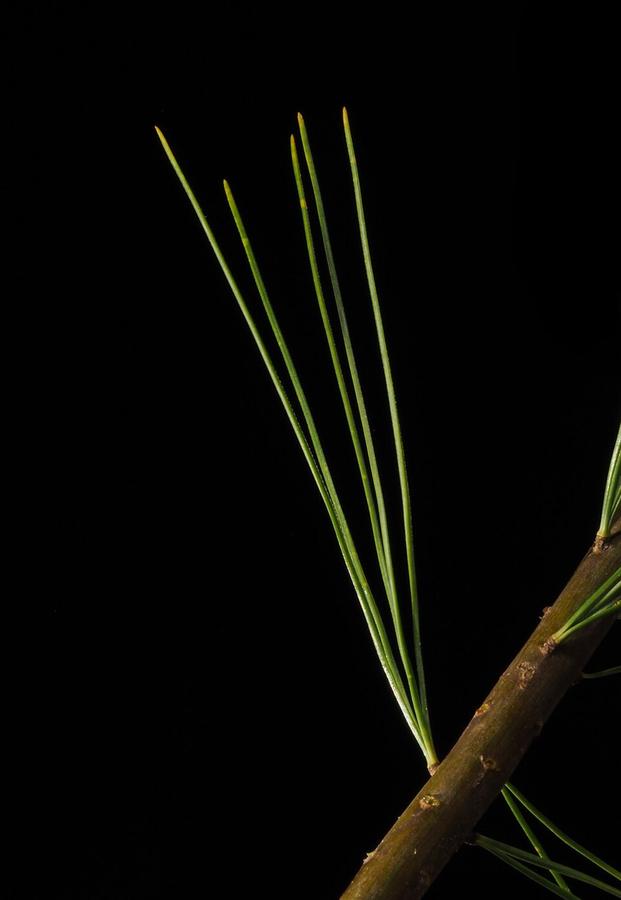
Make sure it is a pine: needles in bundles, sticky sap and a piney smell.
p. 376Rinse the needles and chop or crush them so they give up their flavor (general knowledge, not the manual).
p. 376Throw away needles that are brown, dry or crusted with sap and dirt (general knowledge, not the manual).
p. 376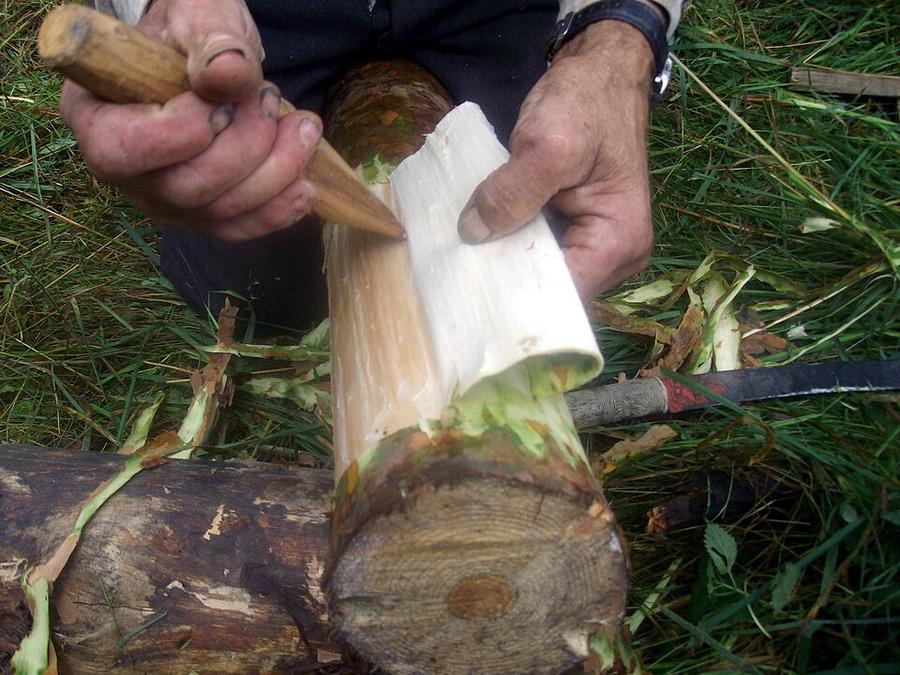
Peel the twigs: scrape off the brown outer bark and peel the soft, juicy layer underneath in strips.
p. 376Seeds: crack the thin shell with your teeth or fingernail and take out the kernel (general knowledge, not the manual).
p. 376
Cook or eat it, step by step
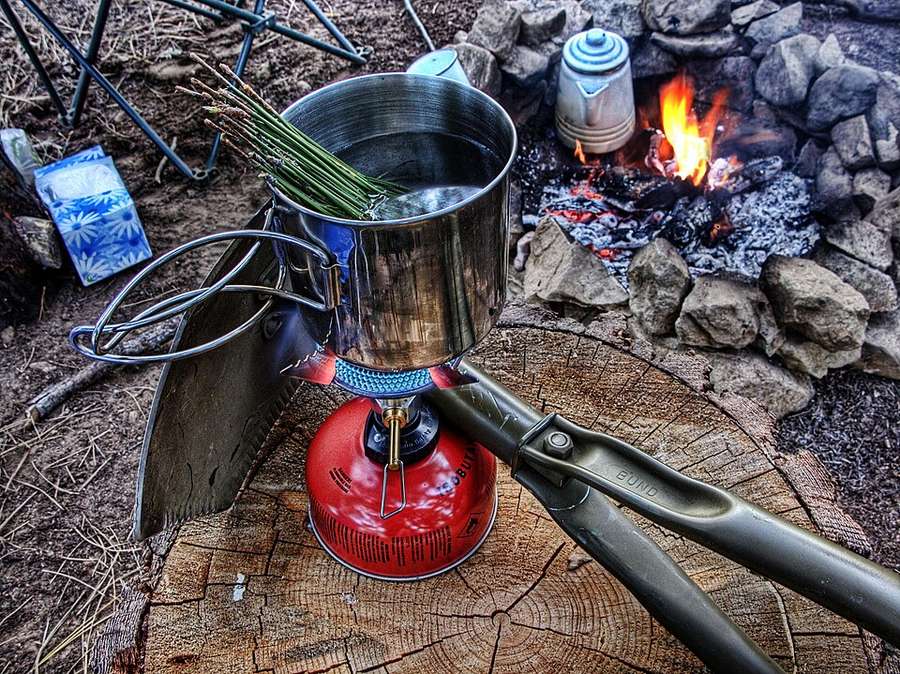
Needle tea: put the chopped needles in a cup, pour hot water over them, cover, and let them steep for about 10 minutes (the time is general knowledge, not the manual). Green pine needle tea is high in vitamin C.
p. 135Inner bark: chew it fresh. It is sweet and full of vitamins.
p. 376Seeds: eat them raw or roast them.
p. 376Young male cones: boil or bake them.
p. 376
Stay safe
- Be 100% sure it is a pine. The manual says the smell and sticky sap tell pines apart from lookalikes. Yew, a shrub with flat single needles and red berries, is deadly poisonous: never make tea from it (general food safety, not the manual). p. 376
- If you are pregnant, skip pine needle tea; some pines have caused miscarriage in cattle (general food safety, not the manual). p. 376
- The manual's Universal Edibility Test is only for an emergency when you cannot name a plant at all. It tests one part of one plant at a time and takes more than 24 hours for each part. It is not a shortcut, and it never works for mushrooms. pp. 128 to 131
- This app's photo reader never tells you a plant in your photo is safe to eat. Check the plant in person, from every side, with a field guide or someone who knows it. p. 137
The app shows what has been seen near your ZIP code, with photos, and can read a photo you take.