Food guide
Acorns: find, pick and prepare
Oak trees drop piles of acorns every fall, and once you wash out the bitter part they make a filling mush or flour.
Page numbers below are from the US Army Survival Manual (FM 21-76) unless another source is named. Each one opens that page.
On private land, ask the owner first. Some state parks let you pick fruit, nuts and mushrooms for your own use. Many state nature preserves ban picking anything. City, county and national parks set their own rules, so check the rules of the park you are in.
Ways to find and pick it
Gather fallen acorns from the ground under oak trees, mostly in September and October (general knowledge, not the manual). Pick brown, heavy ones. Skip any with a tiny round hole: a worm is inside (general knowledge, not the manual).
p. 370White oaks have rounded leaf lobes with no bristle tips, and their acorns ripen in 1 year. Red oaks have bristle tips on the lobes and their acorns take 2 years. White oak acorns taste better. Red oak acorns are more bitter and need more soaking.
p. 370Drop your acorns in a pot of water. Throw away the ones that float: they are usually rotten or wormy (general knowledge, not the manual).
p. 370Clean and prepare it, step by step
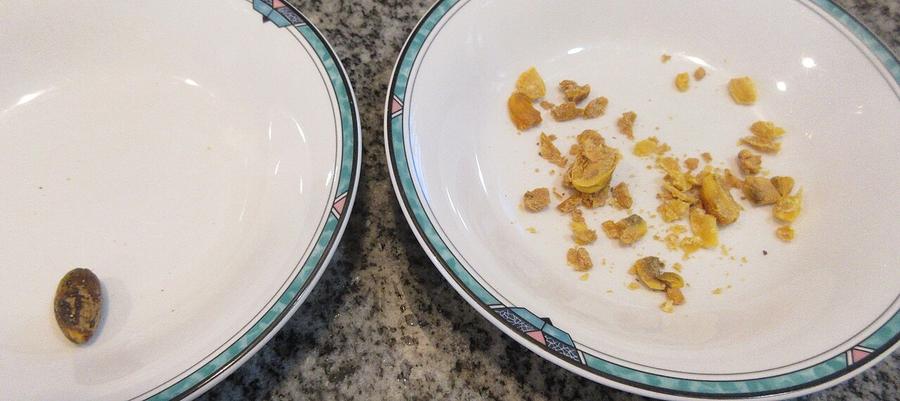
Crack each shell with a rock or the back of a knife and pull out the nut meat inside.
p. 370Throw away any nut meat that is black, moldy or wormy. The manual says never eat food that is starting to spoil or shows mold.
p. 127Crush or chop the nut meat into small pieces. Small pieces lose their bitterness faster.
p. 134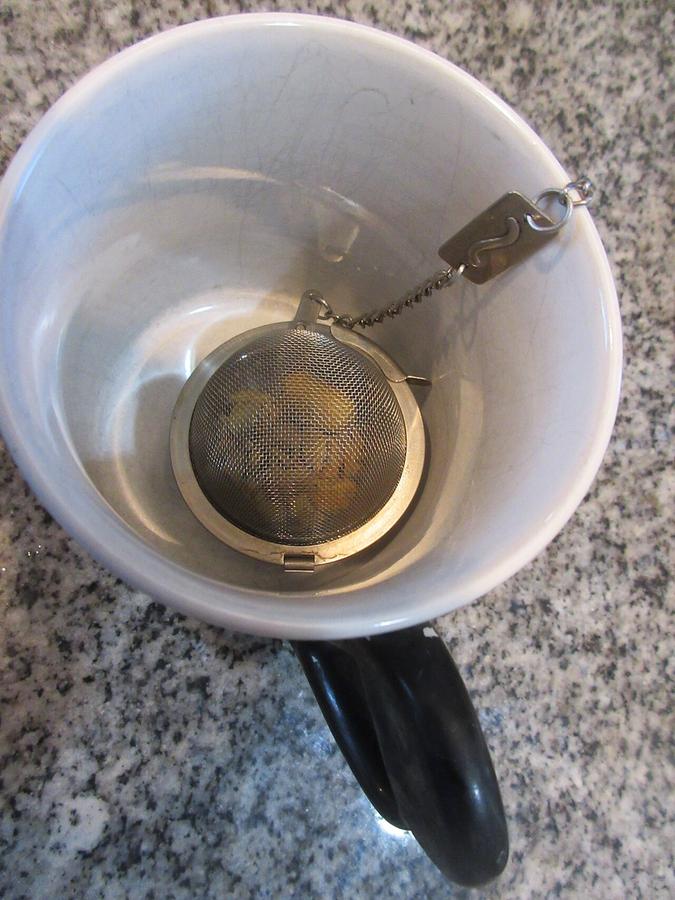
Fast way: put the pieces in a cloth, a strainer or a tea ball and pour boiling water through them again and again. Or tie them in a cloth and leave them in a running stream.
p. 134Slow way: soak the acorns in water for 1 to 2 days. Pour off the brown water and add fresh water each time it darkens. A handful of plain wood ashes in the water speeds this up.
p. 370Boiling way: boil the pieces, pour off the water, and taste one. If it is still bitter, boil again in fresh water. Keep going until the bitter taste is gone.
Military Survival and Rescue Guide, page 88They are ready when a piece tastes mild, not bitter, and does not make your mouth feel dry and puckery. That bitter taste is tannic acid.
p. 370
Cook or eat it, step by step
Boil the leached pieces in water into a thick mush, like oatmeal.
p. 370
Or dry the leached pieces near the fire or in the sun, then grind them between two rocks into flour.
p. 370Mix the flour with a little water into a stiff dough, flatten it into small cakes, and bake them on a hot flat rock by the fire (the cake method is general knowledge; the manual says to use the flour for baking).
p. 370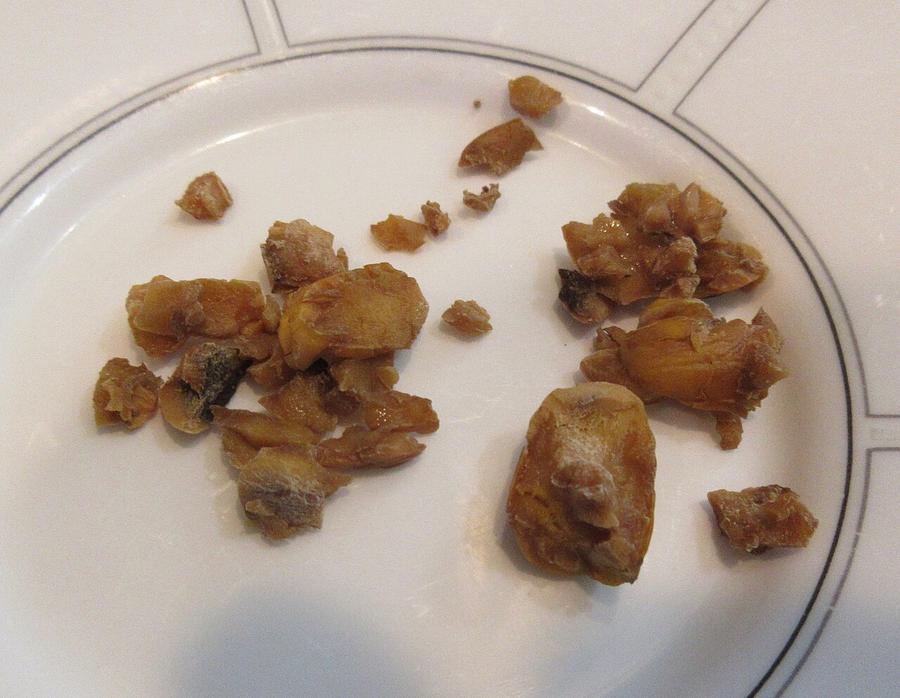
For a snack, toast the leached pieces: shake them in a can with a few hot coals until brown.
Military Survival and Rescue Guide, page 88Acorn coffee: bake leached acorns until very dark, crush them, and steep them in hot water.
p. 370
Stay safe
- Be 100% sure the tree is an oak before you eat its nuts. The manual names no poisonous lookalike for acorns, but buckeye and horse chestnut nuts also fall in woods in fall and are poisonous (general food safety, not the manual). An acorn always sits in a scaly little cap. p. 127
- Never eat bitter acorns. Too much tannic acid can cause kidney failure. Leach them first, every time. p. 370
- The manual's Universal Edibility Test is only for an emergency when you cannot name a plant at all. It tests one part of one plant at a time and takes more than 24 hours for each part. It is not a shortcut, and it never works for mushrooms. pp. 128 to 131
- This app's photo reader never tells you a plant in your photo is safe to eat. Check the plant in person, from every side, with a field guide or someone who knows it. p. 137
The app shows what has been seen near your ZIP code, with photos, and can read a photo you take.