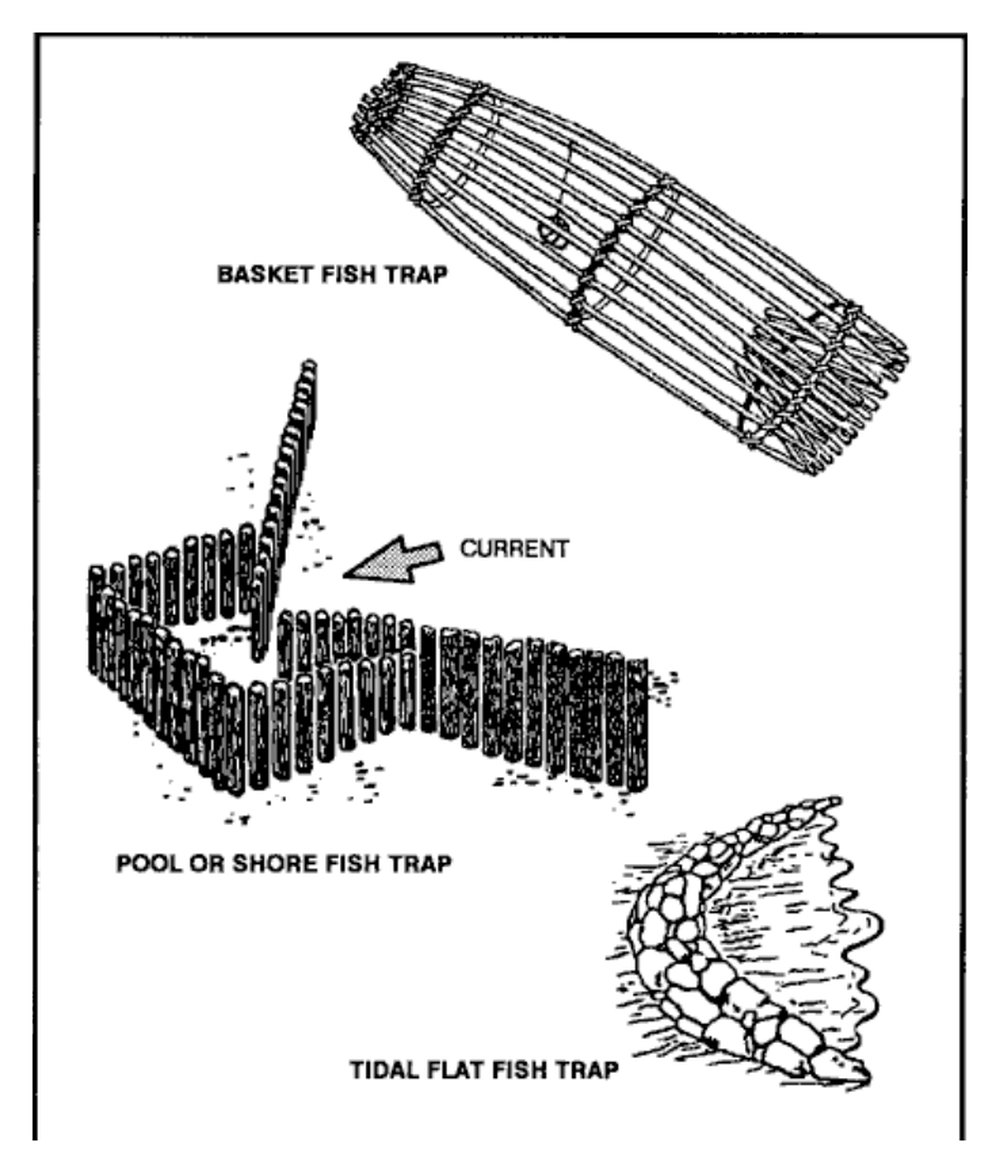
Fish basket: sticks lashed with vines into a funnel with a hole big enough for a fish to swim in. Fish swim in and cannot find the way out. Bait it.
Trapping and fishing · Trapping and catching food course
Hooks catch one fish at a time. The manual's traps and nets can catch many while you rest. In most of the US, homemade fish traps, nets and spears are tightly ruled or banned outside a real emergency, so check your state before you build one in the water.
Traps and nets keep catching while you rest, which saves energy, and a tidal trap can feed a group. Most states limit or ban homemade fish traps, nets and spears, so learn them now and use them only in a true emergency.
Fish basket: sticks lashed with vines into a funnel with a hole big enough for a fish to swim in. Fish swim in and cannot find the way out. Bait it.
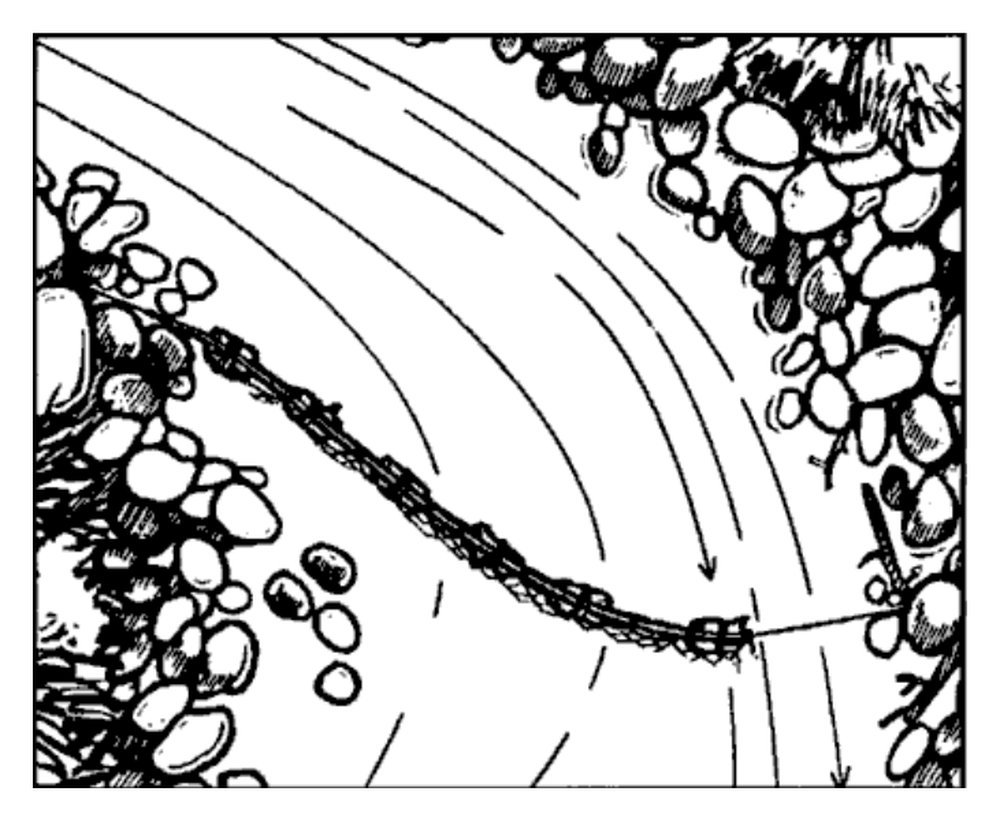
Gill netgill net A net with holes just big enough for a fish’s head. The fish swims in and its gills catch on the way back.: rows of knotted cord hung between two trees while you tie it, using a guideline to keep the holes even, with a strong cord along the bottom. Set across slow water, it catches fish by the gills.
Tidal trap: on a shore, pick the spot at high tide and build at low tide. A low stone wall angled out from the shore, rock pools or sandbars hold fish as the tide goes out.
Spearfishing: in waist-deep water where fish are big and plentiful. Sharpen a long straight saplingsapling A young, thin tree, usually thinner than your wrist. Springy and easy to bend., or split the end, wedge it open and sharpen both halves.
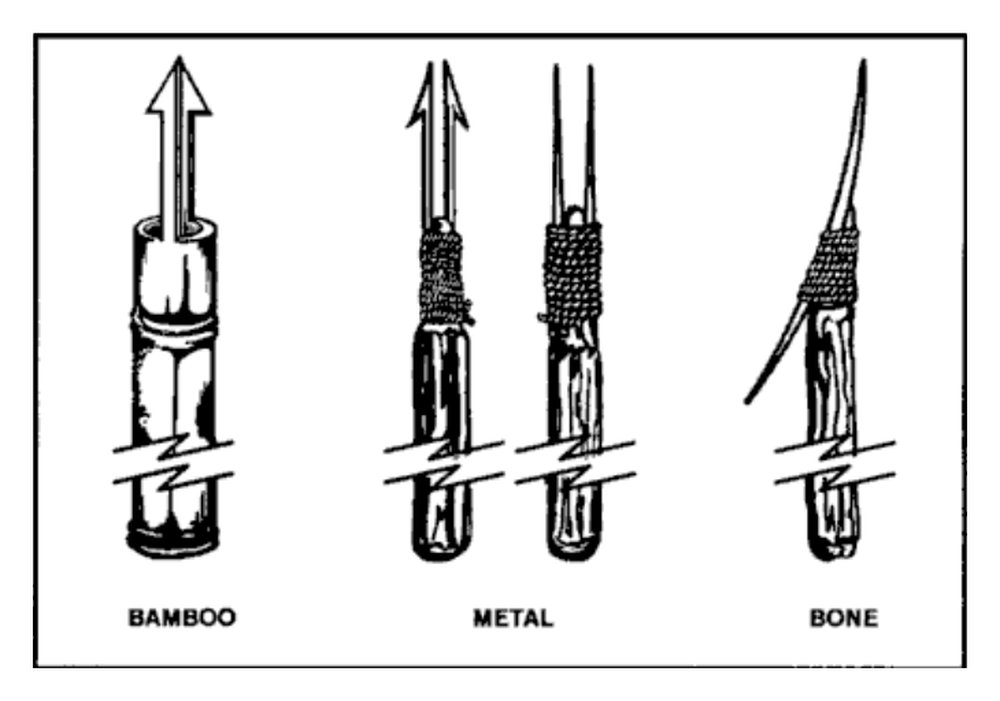
Put the spear point in the water and move it slowly toward the fish, then push hard to pin it to the bottom. Do not lift it out on the spear; it will slip off. Hold the spear with one hand and grab the fish with the other.
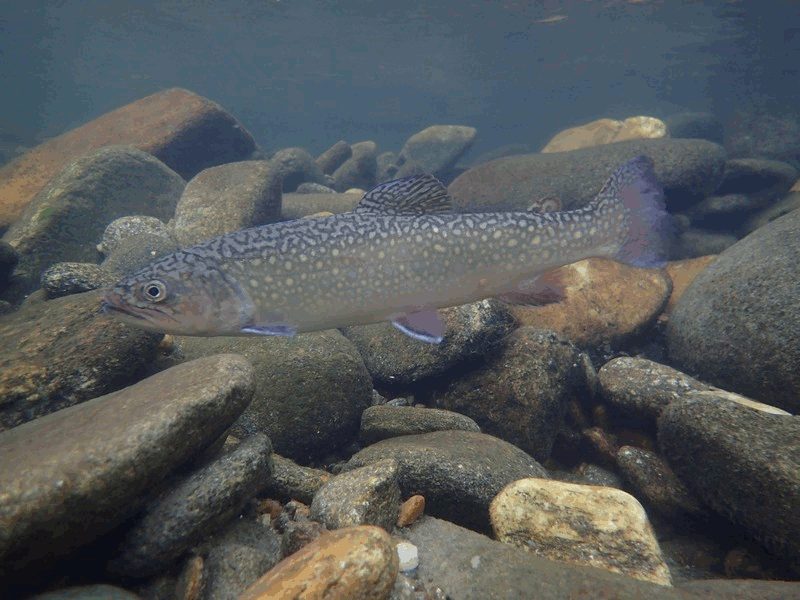
Water bends light. A fish is not quite where it looks. Aim a little below it.
Never throw a spear tipped with your knife. You cannot afford to lose it.
Clean fish at once; they spoil fast in heat. The lesson "Fish, insects, worms and crayfishcrayfish Small freshwater lobsters that hide under stones in streams. They must be boiled at least 5 minutes before eating." shows how to clean, cook and spot spoiled fish.
Lash a small funnel basket from sticks and twine in the yard to learn the shape, then take it apart. Practice spear aim by pushing a stick at a coin on the bottom of a clear tub of water.
Why aim a little below a fish you see in the water?
Water bends light, so the fish is not quite where it looks
The app checks your answers, keeps your place in the Trapping and catching food, and works with no signal once saved.
Before you rely on thisA learning tool, not a replacement for training. In an emergency, call 911. Do not eat any plant, berry or mushroom here. This app never tells you a wild food is safe.