Every state has a wildlife agency that sets the rules: which animals may be taken, in which seasons, how many, and with which methods. Hunting, trapping and fishing each need a state license, even on federal land.
Trapping and fishing · Trapping and catching food course
Know the law before you trap, hunt or fish
Getting your own meat and fish is one of the most useful skills in this trainer, and one of the most tightly ruled. Outside a real emergency, the law decides what you may catch, when, and how. Learn this lesson first, then learn the rest as knowledge and practice.
Why this matters
Catching your own food is a real skill, and the manuals teach it for emergencies. Day to day, wildlife belongs to everyone, so each state decides who may take what, when and how. Knowing those rules keeps you out of trouble and keeps animals around for next year.
The safest way to learn trapping is the way this course teaches it: understand how each trap works, practice the triggers and knots at home, and take everything apart.
Step by step
Trap types are ruled one by one. Many states ban or limit snaressnare A trap made of a loop of wire or cord that tightens around an animal that walks or pokes its head through. and deadfallsdeadfall A trap that drops a heavy weight, like a log or rock, when an animal touches the trigger., and some animals may be hunted but never trapped. In many states, deadfalls and string snares are illegal, and rabbits and squirrels may only be hunted, not trapped.
Almost every wild bird in the US is protected by federal law, the Migratory Bird Treaty Act. Killing or capturing one without a federal permit is against the law. Game birds like turkey and grouse are hunted only in season with a state license.
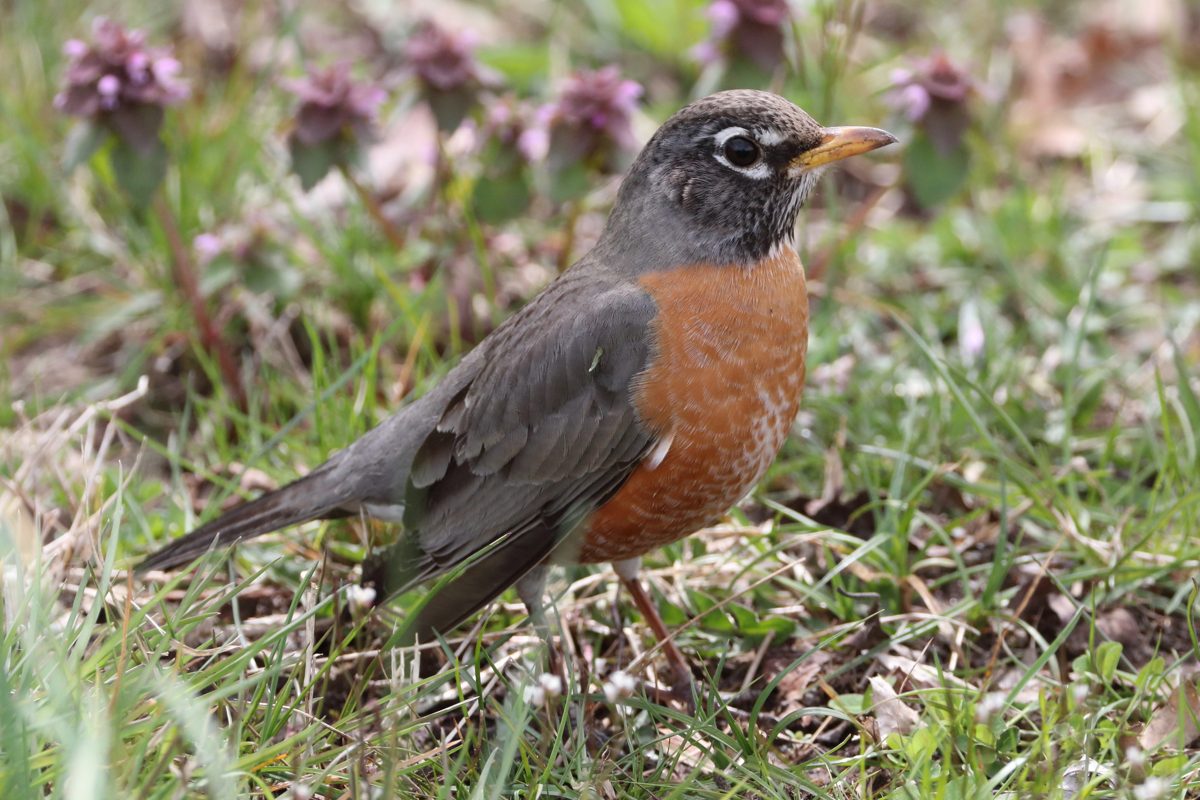
Songbirds like this robin are protected by federal law Outside a real emergency, build every trap and triggertrigger The part of a trap that holds tension until the animal moves it. The heart of every trap. Practice it, then take it apart. in this course to practice, then take it apart. Never leave a trap set, never bait one outdoors, and never set one where people or pets walk.
Some traps in the manuals can kill a person. This trainer explains them only as warnings and never shows how to build them.
A real emergency means you are lost or stranded and cannot get out. Even then, the manuals put food last: shelter, water, fire and signals come first.
Before you go out to practice anything, look up your own state wildlife agency's rules. Rules change every year.
Tips from survival instructors
- Hunting and trapping rules change by state and season. Check your state wildlife agency's rules before you practice anything outdoors.
- Practice the trigger only, then take it apart. A set trap left in the woods can catch pets, protected animals or a child's hand.
Common mistakes
- Thinking a trap is legal because it is homemade. The rules cover the method, not just the animal.
- Leaving a practice snare or trigger set in the yard. Pets and children find them first.
- Catching a songbird because it is easy. Almost every wild bird is protected by federal law.
- Using last year's rules. Seasons and methods change; check every year.
Practice it safely
Look up your state wildlife agency's website and find three things: when small-game season opens, whether snares are legal, and what a fishing license costs. Write them in your notes or on a pocket card.
Quick check
A robin lands near your camp. Outside a real emergency, may you catch it?
- Yes, any bird is fair game
- No. Almost every wild bird is protected by federal law
- Yes, if you cook it
Show the answer
No. Almost every wild bird is protected by federal law
Take the quiz and earn the badge
The app checks your answers, keeps your place in the Trapping and catching food, and works with no signal once saved.
Before you rely on thisA learning tool, not a replacement for training. In an emergency, call 911. Do not eat any plant, berry or mushroom here. This app never tells you a wild food is safe.
Sources
Photo credits
Photo: Seth Wollney, CC BY 4.0, source