Avoid the bite. Do not sleep next to brush, tall grass, boulders or trees; use a clearing. Do not put your hands into rock crevices, heavy brush or hollow logs without looking. Step onto a fallen log and look over it rather than stepping across. Look where you walk. Never pick up a snake, and never handle a freshly killed one: the nerves can still deliver a bite. Snakes hide in brush, tall grass, rock cracks and under logs, so looking first is the whole trick. A snake that was killed a moment ago can still bite, because its nerves keep working for a while.
First aid · First aid course
Snakebite, ticks and stings
The survival manual says most snakebites happen when someone steps on or handles a snake, so the best first aid is not getting bitten. In many states, venomousvenom Poison an animal injects with a bite or sting, like a snake, spider or bee. snakes are rare and protected: leave every snake alone. For bites that do happen, the newer manuals are firm about what not to do.
Why this matters
The survival manual says deaths from snakebite are rare: more than half of people bitten get little or no venom. What does a lot of the harm is infectioninfection Germs growing in a wound. Watch for redness that spreads, swelling, heat, pus, a bad smell or a fever. from the animal's mouth and panic, because excitement speeds up the blood and spreads venom faster. Calm, simple first aid matters more than anything dramatic.
Ticks are the bite you are most likely to get in many states. They carry Lyme disease and Rocky Mountain spotted fever. The winter survival handbook says Lyme infections happen most often from May to September.
If you have signalsignal Anything in threes means help: three fires, three whistle blasts, three piles of rocks., call 911 for any snakebite, a black widowblack widow A shiny black spider with a red hourglass on its belly. Its bite causes painful cramps. or brown reclusebrown recluse A brown spider with a dark violin shape on its back. Its bite may not hurt at first but can leave a slow, deep sore. bite, or anyone who has trouble breathing after a bite or sting. This lesson is a learning tool, not medical training.
What you need
- Soap and water and a clean dressing.
- A splintsplint A stiff support, like sticks or rolled-up magazines, tied along a hurt arm or leg so it cannot move. (a stick, a board or a rolled magazine) and cloth strips for a constricting bandconstricting band A strip of cloth tied around a limb near a snakebite, tight enough to slow the flow under the skin but loose enough that the pulse below it stays. Not a tourniquet..
- Tweezers for ticks and insect repellent.
- A sting kit, if you know or think you are allergicallergic When the body overreacts to something harmless to most people. A strong reaction to a sting can swell the throat and kill. to stings.
- With no gear: a fingernail or the edge of a knife scrapes out a stinger, and a paste of mud and ashes eases the itch.
Step by step
In many states, leave snakes alone outside a true emergency. The venomous ones are rare and protected by law, and the manual says the chance of a bite is small for anyone wearing shoes and long trousers who stays alert. The survival manual says nearly all snakes avoid people and get out of the way. Give any snake plenty of room and walk around it. Do not try to catch or kill it; in many states they are protected, and the survival manual says most bites come from stepping on or handling snakes.
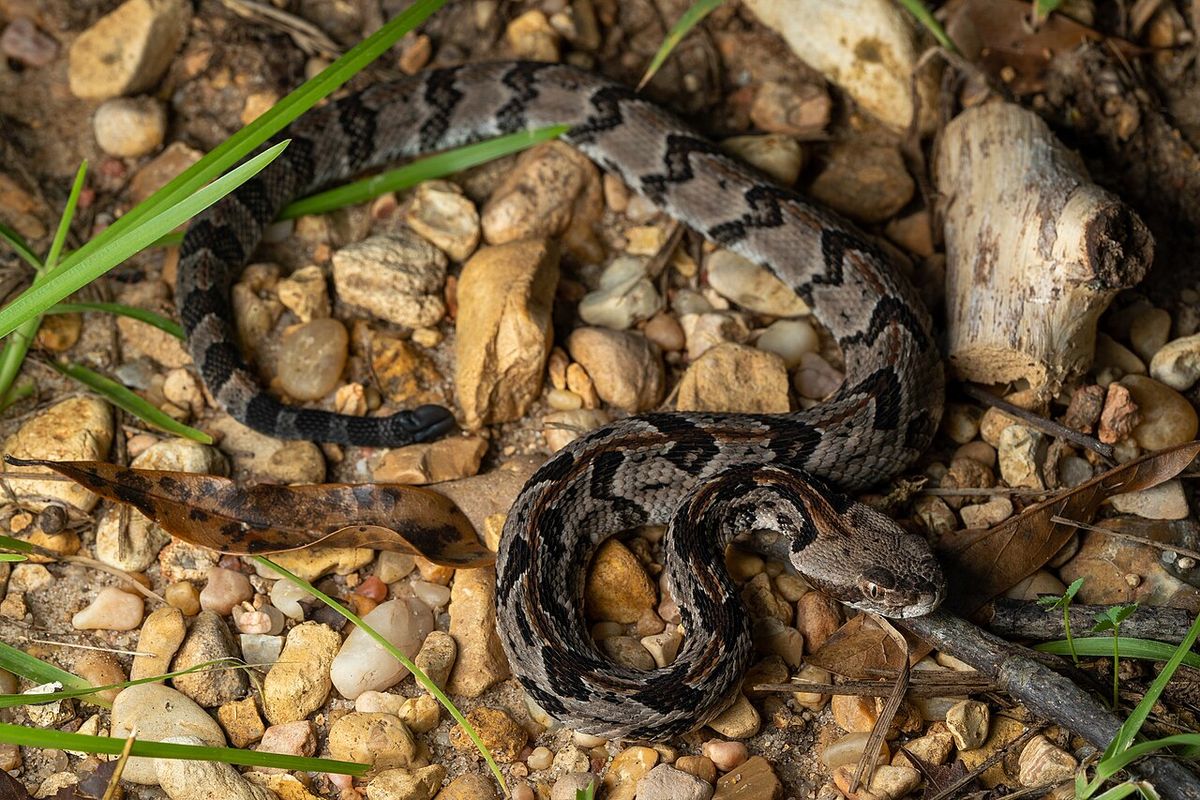
Timber rattlesnake: rare in many states, protected, and best left alone 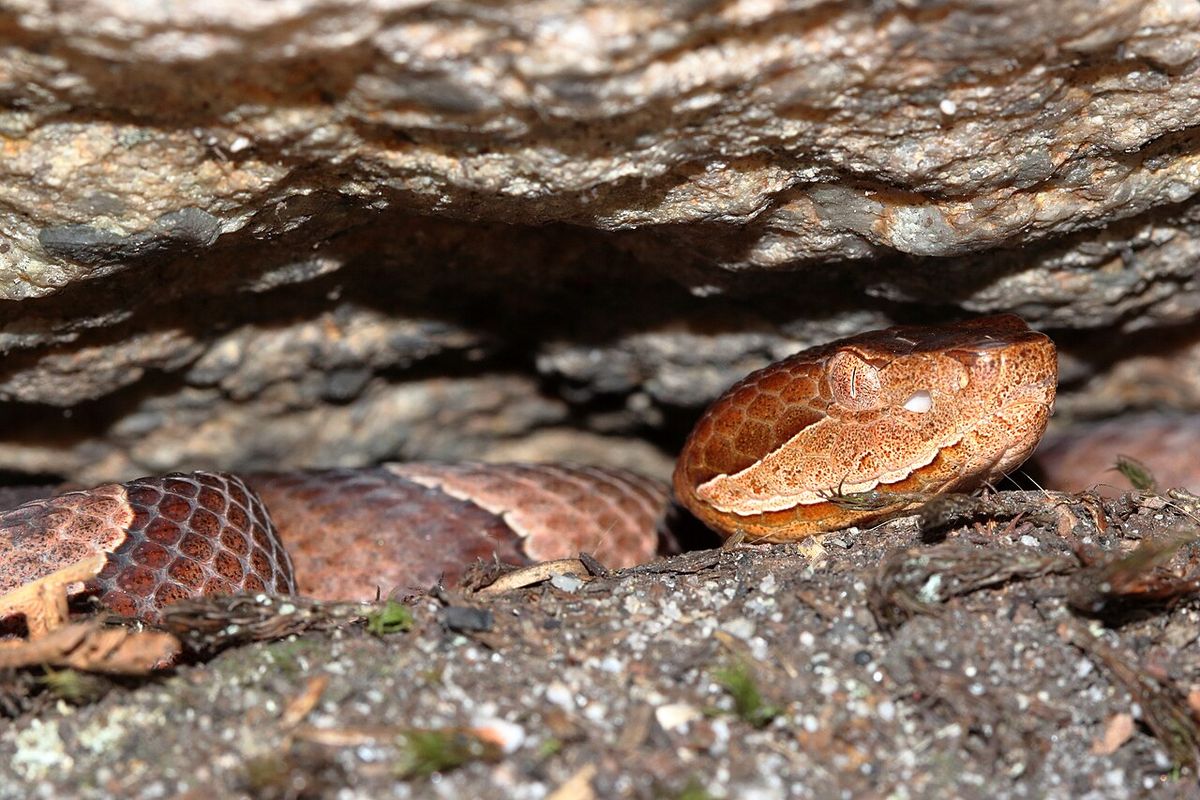
Copperhead: hourglass bands, hard to see in leaves If bitten: the first aid manual says treat every snakebite as poisonous, because all snakes can carry tetanustetanus A serious infection from germs in soil that get in through a wound, even a small puncture. It makes muscles lock up, starting with the jaw.. Fang puncture marks, pain and swelling within minutes to 2 hours, or breathing trouble, weakness and numbness 1.5 to 2 hours later, point to venom. Tetanus (lockjaw) is a serious infection any snake can pass on, so every bite needs a doctor. A harmless snake's bite shows rows of small teeth; a venomous one leavesdebris Dry leaves, pine needles, grass and ferns. Piled deep they trap still air, which is what keeps you warm. one or more fang punctures. Signs of shock can show up within the first 30 minutes.
Do: reassure the person and keep them still. Remove rings, watches and anything that constricts. Clean the bite with soap and water and cover it with a dressing. Splint the limb and keep it level with or below the heart, never raised. Treat for shock. Get to medical help with as little movement as possible; if you are alone, go to help rather than wait to be found. Keeping still and calm slows the spread of venom. The first aid manual says an ice bag over the bite can help, but not ice straight on the skin, and never stop to look for ice if it would slow getting to help. Call 911 if you have signal.
A constricting band: one to two finger widths above and below the bite (or one band between the bite and the heart), tight enough to stop surface flow but not circulation, and moved outward if swelling reaches it. The recovery manual describes it as an elastic overwrap and says to check for a pulsepulse The beat of the heart you can feel in the wrist or neck. Count beats for 15 seconds and multiply by 4 for beats per minute. below it. It is not a tourniquettourniquet A wide band twisted tight around an arm or leg above a wound to stop blood flow entirely. A last resort when everything else has failed or the limb is severed, because it can cost the limb.. You did it right when it is snug but you can still feel a pulse beyond it. If the swelling moves past the band, move the band to the new edge of the swelling.
Do not: cut the bite, use your mouth to suck it, drink alcohol, smoke, eat or drink, touch your face or eyes with hands that may carry venom, or break the blisters that form around the bite. Cutting opens a direct path into the blood for venom and germs. The older 1992 survival manual describes a small cut and suction when help is far away, but the newer first aid and recovery manuals both say do not cut and do not use your mouth, and this lesson follows them. Venom on your hands can hurt your eyes, so wash your hands.
Ticks carry Rocky Mountain spotted fever and Lyme disease. Check your whole body at least once a day. Grasp an attached tick with tweezers where the mouth parts enter the skin, do not squeeze its body, and take the whole tick. The survival manual also covers it with petroleum jelly, oil or tree sap to cut off its air so it lets go. Wash your hands and clean the bite daily until it heals. Taking the whole tick, without squeezing it, is the goal. Wash your hands after. The winter survival handbook says a rash at the bite that spreads to 5 inches or more, or a flu-like illness, can mean Lyme disease; see a doctor. Spotted fever can start 2 to 14 days after the bite.
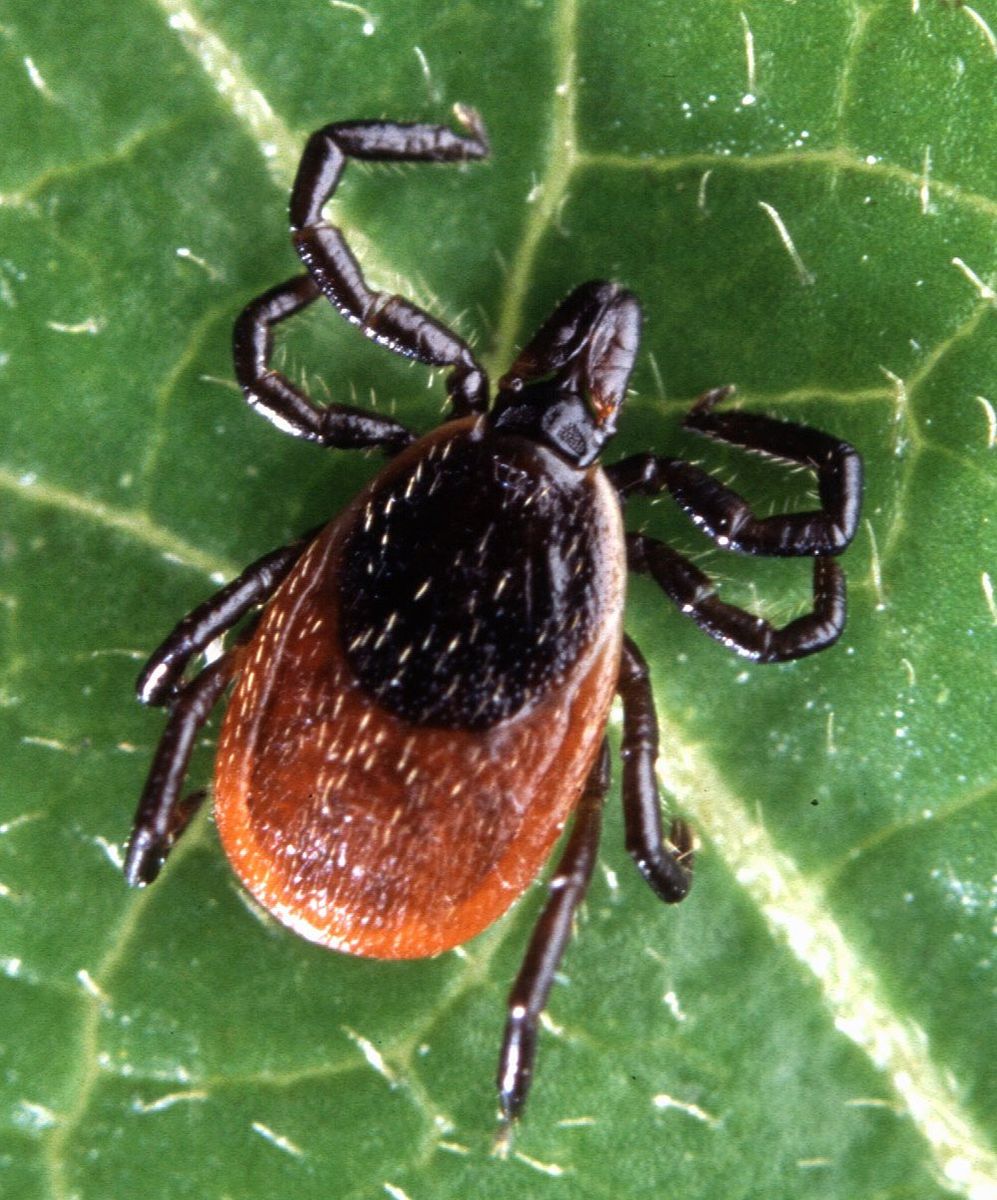
Deer tick: check your whole body at least once a day Bee or wasp: scrape the stinger and venom sac out at once with a fingernail or knife blade. Do not pinch or grasp it; that squeezes in more venom. Wash with soap and water. If you know you are allergic, always carry a sting kit. A cold compresscompress A pad of cloth, wet with cold or warm water, held on a sore spot. or a paste of mud and ashes eases the itch. Scraping pushes the stinger out sideways; pinching squeezes the venom sac and pushes more venom in. If someone has trouble breathing after a sting, call 911 and use their sting kit if they have one.
Black widow (red hourglass on the belly): mild pain at first, then severe pain spreading to the belly and legs, cramps, nausea, sweating. Brown recluse (dark violin on the back): little or no pain, then a red area with a dark center that becomes an ulcer which will not heal. For either, treat for shock, clean and dress the bite, and get medical help. Only the female black widow bites. Her bite's symptoms usually ease after several hours and are gone in a few days, but be ready to do CPR. The brown recluse sore can turn into a star-shaped deep purple patch after 3 to 4 days and an ulcer that lasts weeks or months. Children and people who are already ill have the worst reactions.
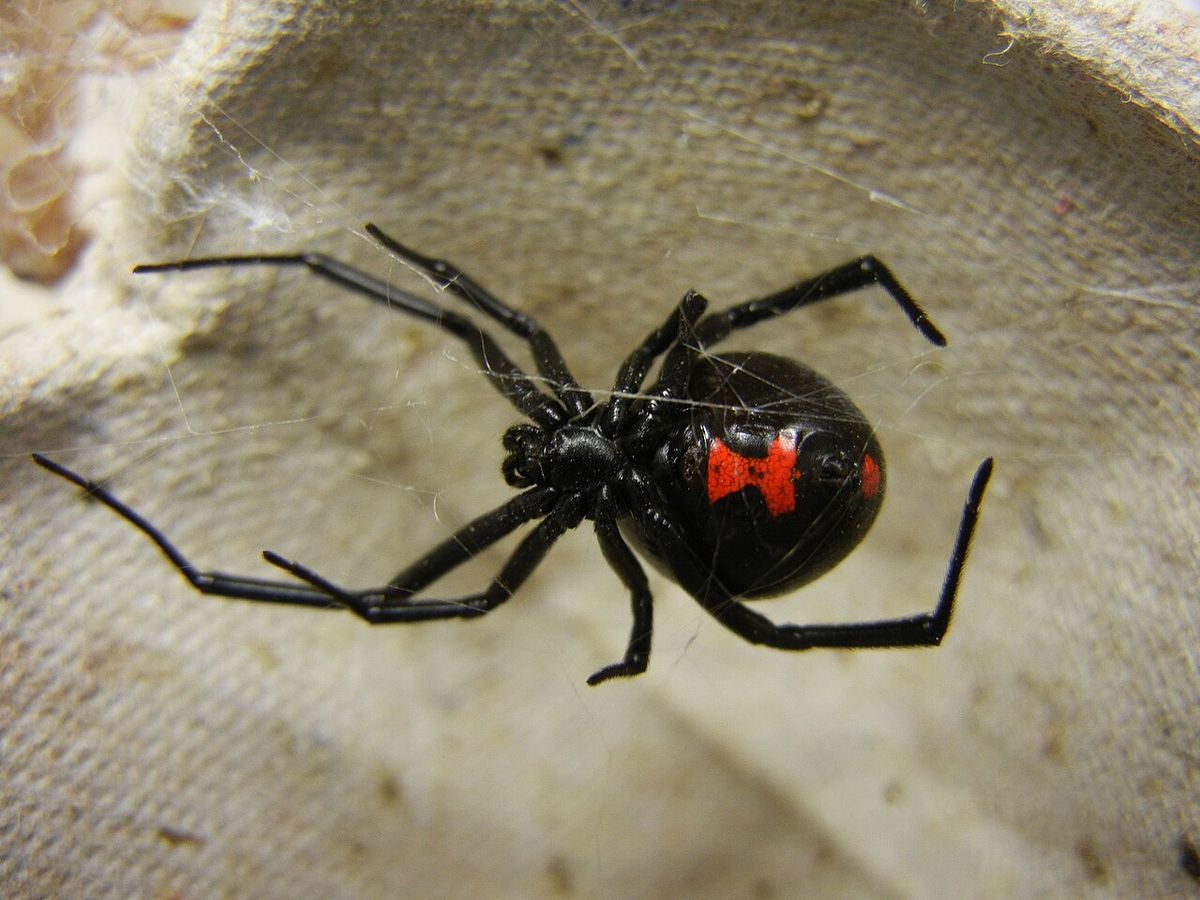
Black widow: the red hourglass on the belly Prevent the rest: keep shots current, use repellent and netting, wear clothing properly, do not scratch bites, and do not sit, lie down or put on boots without looking first. Shake out boots and clothes before you put them on, and look before you sit or lie down. Scratching a bite can let germs in.
Tips from survival instructors
- Do not cut a snakebite, suck it, ice it or put on a tight tourniquet. Keep the person calm and still and get help.
- Scrape a bee stinger out sideways with a fingernail or a card. Squeezing it pushes in more venom.
Common mistakes
- Cutting a snakebite or sucking it. Clean it, cover it, splint it and get to help.
- Raising a bitten arm or leg. Keep it level with or below the heart.
- Tying the band as tight as a tourniquet. It should stop flow near the skin only; you must still feel a pulse beyond it.
- Pinching a bee stinger with your fingers. Scrape it out with a fingernail or knife edge.
- Squeezing a tick's body or leaving the head in. Grip it at the skin with tweezers and take the whole tick.
- Picking up a snake, even a dead one. Leave every snake alone.
Practice it safely
Make a tick check part of every walk: look over your whole body, including behind the knees, the waistline and the hairline, and practice the tweezers grip on a small bead taped to your arm. On a trailgame trail A narrow path worn through grass or brush by animals using it over and over. A trap goes on a trail an animal already uses., practice the habits: step onto a log and look over it, and look before you put your hands anywhere.
With a friend, practice tying a constricting band one to two finger widths from a pretend bite and checking for a pulse beyond it, then splinting the arm without binding it. Watch snakes only from a distance. In a real emergency, call 911 if you have signal.
Quick check
Should you cut a snakebite and suck out the venom?
- Yes, right away
- No; do not cut and do not use your mouth
- Only if help is far away
Show the answer
No; do not cut and do not use your mouth
Take the quiz and earn the badge
The app checks your answers, keeps your place in the First aid, and works with no signal once saved.
Before you rely on thisA learning tool, not a replacement for training. In an emergency, call 911.
Sources
- US Army Survival Manual, pages 37 to 41 (bites and stings, snakebites) and 445 to 446 (ways to avoid snakebite)
- Army First Aid Manual, pages 169 to 170 (snakebites)
- Military Survival and Rescue Guide, pages 51 to 52 (snakebite)
- Your state's hunting and trapping rules
- US Army Survival Manual, pages 37 to 41 (insect bites, ticks, bee and wasp stings, spiders, snakebite signs and treatment), 177 (shake out boots, look before you sit) and 445 to 446 (ways to avoid snakebite)
- Army First Aid Manual, pages 169 to 171 (treat all snakebites as poisonous, constricting bands, do not cut or suck)
- Military Survival and Rescue Guide, pages 51 to 52 (snakebite, compression overwrap, pulse check)
- Marine Corps Winter Survival Handbook, page 97 (Lyme disease, Rocky Mountain spotted fever)