Poisonous plant
Deadly nightshade and its common cousins: how to tell them
True deadly nightshade (belladonna) is a European plant that grows wild in only a few spots in the US. The nightshade most people find is black nightshade, a common weed with white star flowers and black berries. Neither is something to taste.
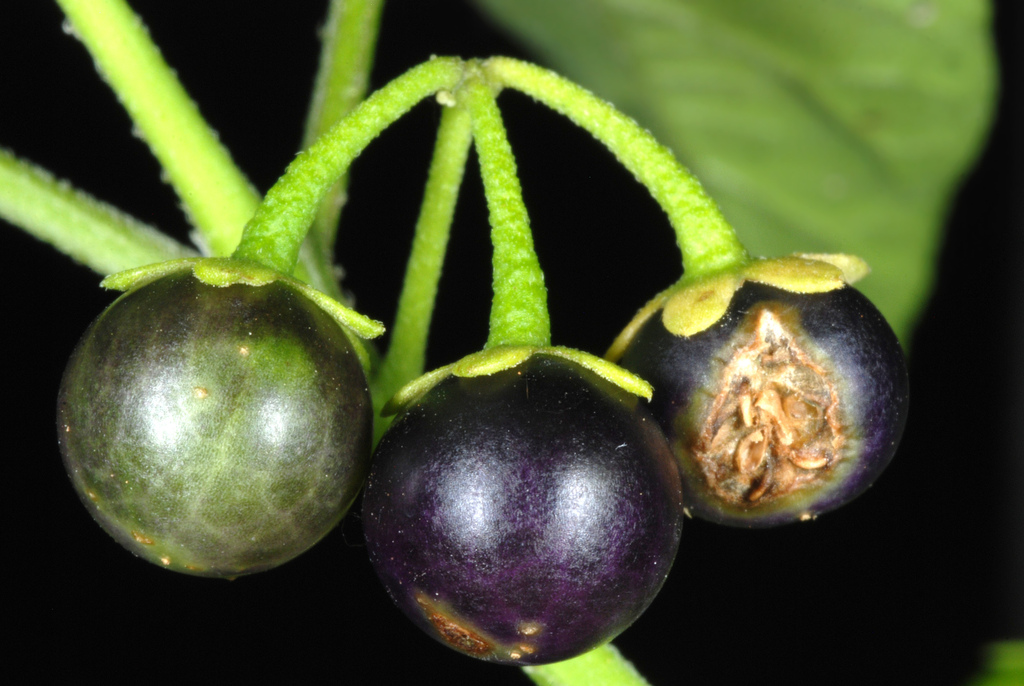
How to tell it
- Black nightshade: a low, branching weed with small white star-shaped flowers and a yellow center.
- Black nightshade: small round berries in clusters, green at first, then dull or shiny black.
- Deadly nightshade (belladonna): a bushy plant 2 to 5 feet tall with dull purple-brown, bell-shaped flowers.
- Belladonna: one shiny black berry the size of a cherry, sitting in a green star of five leaf-like points.
Where you find it
Black nightshade grows across the US in gardens, fields, yards and waste ground. Belladonna has escaped from gardens in a few places in the Northeast, the Great Lakes and the Pacific Northwest.
Scientific name: Atropa belladonna, Solanum ptycanthum and relatives
Look-alikes
They grow on woody shrubs and each berry has a small crown at the bottom. Nightshades are soft green plants with star-shaped flowers.
A close cousin: a climbing vine with purple flowers and red berries. Also poisonous.
Dark purple berries too, but in long hanging strings on a tall plant with red stems.
Why it is dangerous
Belladonna holds atropine and related poisons in every part. A few berries can make a child very sick, with a racing heart, hot dry skin, confusion and seizures. Black nightshade holds solanine, strongest in the green berries and leaves, which causes vomiting, diarrhea and confusion.
What to do
- If someone eats leaves or berries, call Poison Help at 1-800-222-1222 right away.
- Call 911 for a racing heart, confusion, a seizure or trouble breathing.
- Keep a piece of the plant or a clear photo to show the poison center or doctor.
- Pull it from yards and play areas while wearing gloves, and teach children never to eat wild berries.
The free app reads your photo, names the likely match, shows its look-alikes, and tells you what has been seen near your ZIP code.
Sources
- NC State Extension Plant Toolbox: Black nightshade
- NC State Extension Plant Toolbox: Bittersweet nightshade
- US Army Survival Manual, page 127
Written in our own words from these public sources.