Poisonous plant
Pokeweed: the tall plant with purple berries that poisons
Pokeweed is a tall, fast-growing plant with pink to red stems and long clusters of dark purple berries. It grows in yards, fence rows and field edges across the eastern half of the US, which puts its berries within easy reach of children.
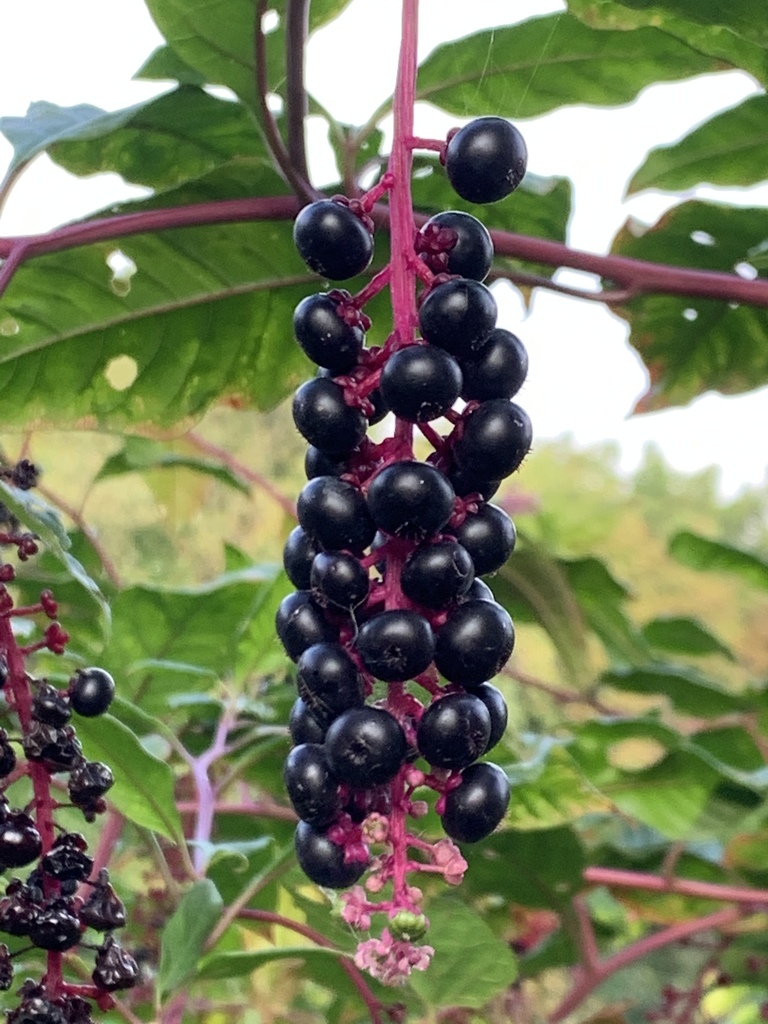
How to tell it
- Grows 4 to 10 feet tall in a single season, with thick, smooth stems that turn pink, red or purple.
- Large, smooth, pointed leaves up to a foot long.
- Long, drooping clusters of small white flowers, then green berries that ripen to shiny dark purple.
- A thick white taproot, like a large carrot or parsnip.
Where you find it
Across the eastern and central US and parts of the West, in disturbed ground: yards, fence rows, forest edges, clearings and roadsides.
Scientific name: Phytolacca americana
Look-alikes
Grapes grow on woody climbing vines with tendrils and lobed leaves. Pokeweed is an upright plant with smooth leaves.
A woody shrub with leaves split into five to eleven leaflets and flat-topped berry clusters. Pokeweed clusters hang down in long strings.
People have been poisoned digging pokeweed roots by mistake. Never eat a wild root you have not identified for certain.
Why it is dangerous
Every part of pokeweed is poisonous, the root most of all, then the leaves, stems and berries. Eating it causes burning in the mouth, vomiting, cramps and diarrhea, and large amounts can affect breathing and the heart. Children are poisoned most often, by the berries.
What to do
- If someone eats any part, call Poison Help at 1-800-222-1222 right away, even if they feel fine.
- Call 911 for trouble breathing, a seizure, or someone who will not wake up.
- Wear gloves to pull it. The juice can irritate skin, and it stains.
- Pull young plants before berries form, and dig out the root of older ones.
The free app reads your photo, names the likely match, shows its look-alikes, and tells you what has been seen near your ZIP code.
Sources
Written in our own words from these public sources.