← Outdoor Survivalist Trainer Your area

Water · Water course

Collecting water with no stream in sight

Dew, rain, plants and the ground itself give up water if you know how to ask. These take time and the right materials, so start them early and keep looking for a real source.

Why this matters

Sometimes there is no stream, spring or lake you can reach. These methods pull water out of the air, the ground and living plants. They are slow, so start them early and keep looking for a real source while they work.

The manual is honest about how little they make. A below-ground still gives about half a liter to a liter (about 1 to 2 pints) in 24 hours, and you would need at least three stills to meet one person's daily need. Treat these as extra water, not your whole supply.

What you need

  • Dew: rags, a T-shirt or tufts of fine grass, and a container. No other gear.
  • Rain: any container, or a sheet of plastic or a poncho folded into a bowl.
  • Transpiration bagtranspiration Plants breathing out water through their leaves. A clear bag over a leafy branch catches that water as drops.: a clear plastic bag, a string or cord, and a small rock.
  • Below-ground still: something to dig with, a cup or can, a clear plastic sheet, a rock, and a drinking tube if you have one.
  • Seepage basinseepage basin A hole dug a short way from muddy water. The ground filters the water as it soaks into the hole, so what collects is clearer.: something to dig with. The soil does the straining.

Stills and plant bags take about 24 hours to make half a liter to a liter (about 1 to 2 pints); dew must be gathered before sunrise.

Step by step

  1. Dew: before sunrise, tie rags or tufts of fine grass around your ankles and walk through dewy grass. Wring the rags into a container and go again. People have collected a liter an hour this way. Dew is the water that settles on grass on cool, clear nights. It is gone soon after the sun comes up, so start early. You are doing it right when the rags come out heavy and drip when you squeeze them.
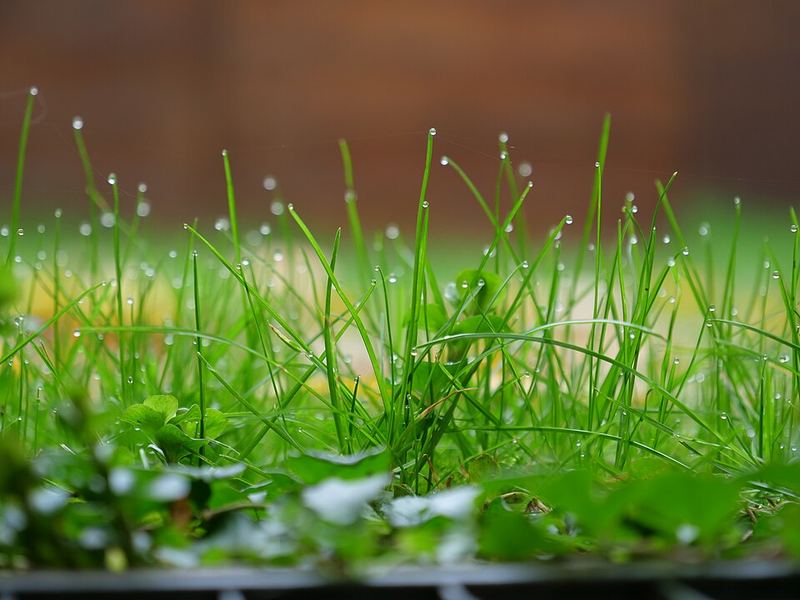
    Blades of grass tipped with drops of morning dew
    Dew like this soaks a rag fast before sunrise
  2. Rain: catch it in anything. With no container, pleat a sheet of plastic or a poncho into a bowl and hold the pleats with pins, sticks or your hands. Rain caught clean needs no treatment. Clean rain is one of the few kinds of water the manuals say needs no treatment. Pleating means folding the edges up in small folds so the sheet holds a puddle. Use a clean sheet; dirt on the plastic ends up in your water.

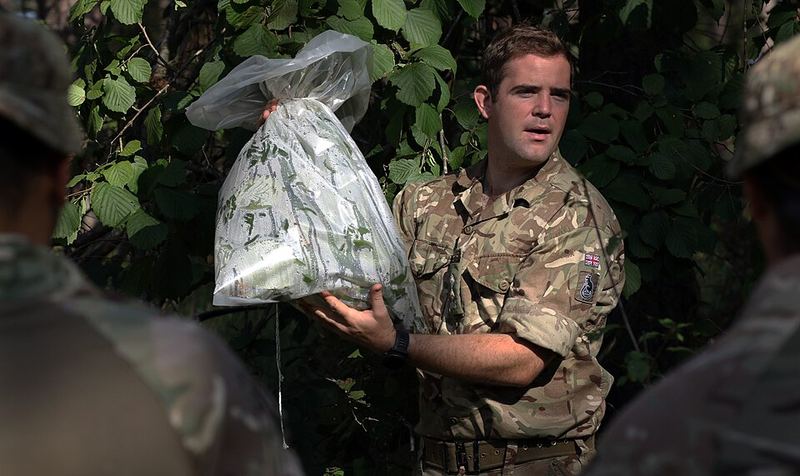
  3. Transpiration bag: tie a clear plastic bag over a leafy, living branch in full sun with a small rock in a low corner. Water from the leavesdebris Dry leaves, pine needles, grass and ferns. Piled deep they trap still air, which is what keeps you warm. collects in the bag by afternoon. Loosen the tie, tip it out, retie. Move to a new branch each day. Living leaves give off water vapor in the sun. The clear bag traps it, it turns back into drops on the inside, and the drops rungame trail A narrow path worn through grass or brush by animals using it over and over. A trap goes on a trail an animal already uses. down to the rock. The manual warns the water will taste like the plant smells, and never to use a poisonous plant.

    A soldier holds up a clear plastic bag tied over leafy branches with water inside
    Water from the leaves collects in the bag by afternoon
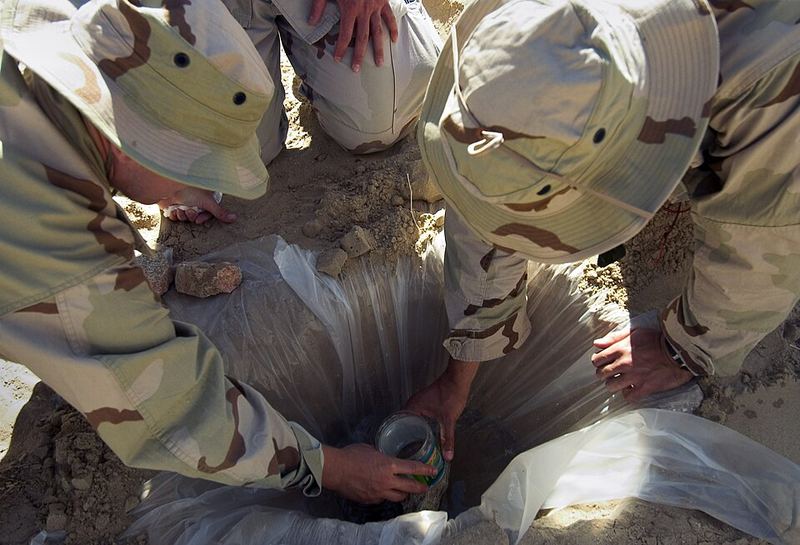
  4. Below-ground still: dig a bowl-shaped hole about 1 meter across in a sunny spot, set a container in the middle, cover the hole with clear plastic, seal the edges with soil and put a small rock in the center so the plastic dips over the cup. Expect only half a liter to a liter a day. A still uses the sun to warm damp soil under clear plastic. The water rises, collects on the underside of the plastic, and runs down to the low point over your cup. The manual digs it about 3 feet across and 2 feet deep (1 meter across, 60 centimeters deep) and lowers the plastic about 16 inches (40 centimeters) into the hole. Keep the plastic from touching the sides of the hole, or the soil soaks the water back up.

    Sailors kneel around a plastic-covered hole in sand with a jar set below the center
    A below-ground still: plastic over a hole, cup under the dip
  5. Put green plants, or even unsafe water in a trench around the edge, inside the still to raise the yield. The soil filters it and the sun lifts clean water onto the plastic. The manual says to dig a small trench about 10 inches (25 centimeters) outside the still for dirty or salty water. Pour carefully: if any spills near the edge where the plastic meets the soil, it can drip straight into your cup. Only use green plants you know are not poisonous.

  6. Seepage basin: near a swamp or a muddy pond, dig a hole 1 meter from the edge, about as deep as the water level, and let it fill through the ground. The soil strains out the worst of it. Still treat it. Water moving sideways through the soil gets strained, the way coffee drips through a filter. This clears it but does not kill germs. Treat it before you drink.

  7. In the tropics: green bamboo, water vines with clear sap and banana stumps give drinkable water. Never drink milky or colored sap, and never touch a vine to your lips. This step is for jungle trips. The manual warns not to drink any liquid that is sticky, milky or bitter, and not to keep plant sap longer than 24 hours because it starts to spoil. These are tropical plants, so learn this one from the book.

  8. Label your water. Keep found water and treated water in different containers so you never mix them up. Two clear bottles look the same once they are full. Mark the dirty one with tape, a knot or a scratch so nobody drinks from it by mistake.

Tips from survival instructors

  • Before sunrise, tie a cloth around your ankles and walk through tall grass. Wring out the dew into a container.
  • Catch rain with anything: a tarp, a poncho, a trash bag or a big leaf. Rain is usually the cleanest water you will find.

Common mistakes

  • Letting the plastic of a still touch the sides of the hole. Fix: lower it so it hangs free in a cone, with the rock right over the cup.
  • Putting a poisonous plant in a bag or a still. Fix: the manual warns it gives poisonous liquid, so only use plants you know well.
  • Putting hard sticks or spines in a bag. Fix: pick them out first; they poke holes and the water leaks away.
  • Counting on one still to keep you going. Fix: the manual says you need at least three for one person; keep looking for a real source.
  • Skipping treatment on seepage or still water made from dirty water. Fix: treat anything that came from the ground or from dirty water.

Practice it safely

A transpiration bag is an easy backyard project. With a grown-up's OK, tie a clear bag over a leafy branch of a tree in your own yard on a sunny morning and check it in the afternoon. Take the bag off when you are done so the branch stays healthy. Pour the water on the ground; this is practice, not drinking water.

Try the dew rags on your own lawn one morning before sunrise and measure how much you can wring out in 15 minutes. If you dig a practice still, do it only in your own yard with permission, and fill the hole back in when you finish. Do not dig in parks.

Quick check

Which of these needs no treatment before drinking?

  • Water from a seepage basin
  • Rain caught in clean plastic
  • A muddy puddle
Show the answer

Rain caught in clean plastic

Take the quiz and earn the badge

The app checks your answers, keeps your place in the Water, and works with no signal once saved.

Before you rely on thisA learning tool, not a replacement for training. In an emergency, call 911.

Sources

Photo credits
Photo: Leonhard Lenz, CC0, sourcePhoto: U.S. Army photo by Sgt. John Onuoha, Public Domain, sourcePhoto: U.S. Navy photo by All Hands Photographer's Mate 1st Class Michael Larson, Public Domain, source

More on water