Poisonous plant
Poison sumac: the swamp shrub that breaks the "leaves of three" rule
Poison sumac has the same rash-causing oil as poison ivy, but it does not have three leaflets, so the old rhyme will not warn you. It is a shrub or small tree of wet ground in the eastern US.
How to tell it
- Each leaf has 7 to 13 smooth-edged leaflets set in pairs along a stem, with one leaflet at the tip.
- The leaf stems are often red, and the leaflets turn bright orange and red in fall.
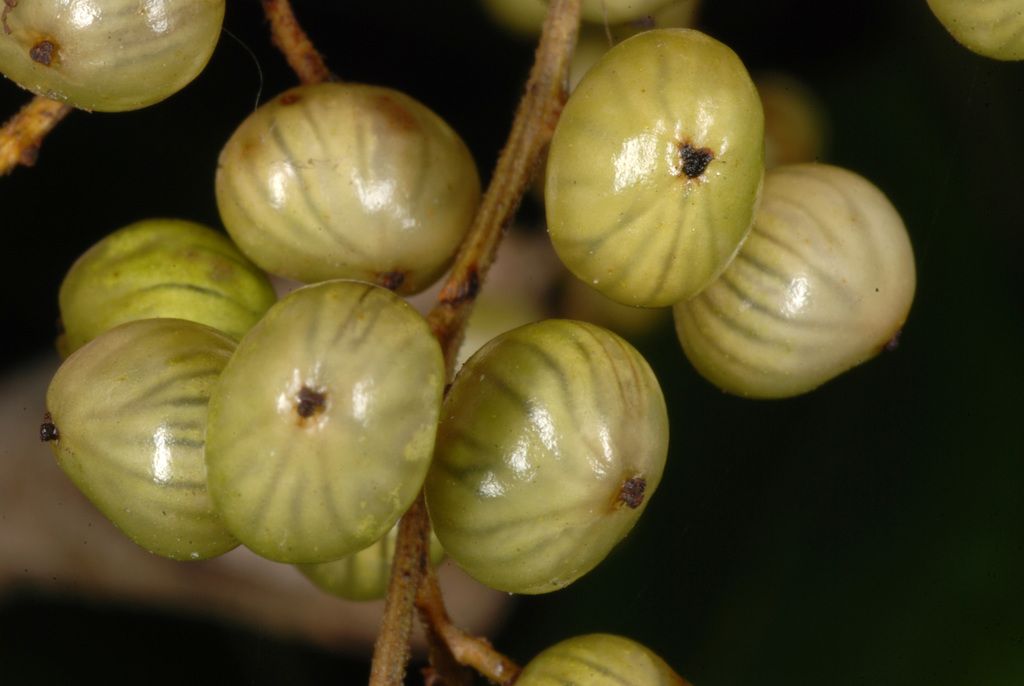
- Loose, hanging clusters of small whitish or gray-green berries.
- Grows as a shrub or small tree, usually with its feet in water: swamps, bogs, wet woods and the edges of ponds.
Where you find it
Wet ground in the eastern half of the US, from the Great Lakes and New England south to Florida and west to Texas.
Scientific name: Toxicodendron vernix
Look-alikes
These common sumacs have toothed leaflets and upright, cone-shaped clusters of fuzzy red berries, and they grow in dry, sunny places. Red berries pointing up: harmless sumac. White berries hanging down: poison sumac.
Ash leaflets are also in pairs, but the leaves grow opposite each other on the twig and there are no white berry clusters.
Why it is dangerous
It carries urushiol in its leaves, stems, roots and berries all year. Because it grows in wet places people wade through, it often touches bare legs and arms. Never burn it: the smoke can cause a serious lung reaction.
What to do
- Wash the skin with rubbing alcohol or dish soap and plenty of water as soon as you can, rinsing often.
- Scrub under your nails and wash your hands before touching your face.
- Wash clothes and boots that brushed the plant, and wipe tools with rubbing alcohol.
- Cool compresses, calamine lotion or hydrocortisone cream help the itch.
- See a doctor for a rash on the face or a large area. Call 911 for trouble breathing.
The free app reads your photo, names the likely match, shows its look-alikes, and tells you what has been seen near your ZIP code.
Sources
Written in our own words from these public sources.