Animal sign
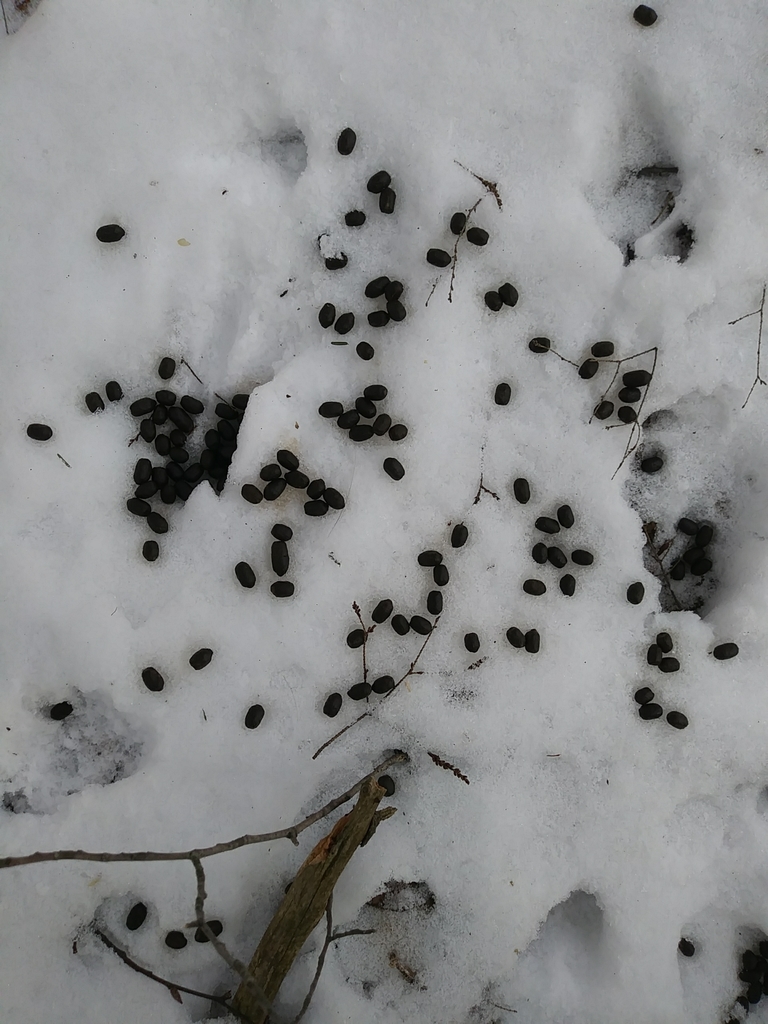
Deer scat: what deer droppings look like through the year
Deer droppings are some of the most common sign in US woods, fields and backyards. Their shape changes with the season, and how fresh they look tells you how recently deer passed.
How to tell it
- Winter and dry seasons: piles of 20 or more dark, oval pellets about half an inch long, often with a small point at one end.
- Summer: softer pellets stuck together in clumps when deer eat green, wet plants.
- Dark and shiny when fresh, dull and lighter brown as they dry out over days.
- Found along trails, in bedding spots of pressed-down grass, and near feeding areas.
Where you find it
White-tailed deer live in nearly every state, from farm country and suburbs to deep woods. Mule deer replace them across much of the West.
Scientific name: Odocoileus virginianus and O. hemionus
Look-alikes
Round balls, not oval, lighter brown and full of plant fiber, in smaller groups.
Similar shape but larger, about three-quarters of an inch, in the West and a few eastern herds.
Similar pellets near farms. Look for fences and farm animals nearby.
What it tells you
Fresh, shiny pellets tell you deer passed within hours, and a trail with many piles leads to water, feeding or bedding areas. The survival manual uses droppings and trails to learn which animals live in an area. Deer areas are also tick areas, so check yourself after walking through them.
What to do
- Look, do not handle. Use a stick or take a photo with something for size.
- Follow the trail with your eyes to find tracks, rubs on small trees and bedding spots.
- Check yourself for ticks after walking through deer trails and tall grass.
- Keep dogs from eating droppings, which can carry parasites.
The free app reads your photo, names the likely match, shows its look-alikes, and tells you what has been seen near your ZIP code.
Sources
Written in our own words from these public sources.