Food guide
Raccoon and opossum: catch, clean and cook
Raccoons and opossums come out at night along every creek; both are fat, filling meat once they are cleaned well and cooked all the way through.
Page numbers below are from the US Army Survival Manual (FM 21-76) unless another source is named. Each one opens that page.
In many states, raccoons and opossums are furbearers. You may hunt or trap them only in their fall and winter seasons, with a hunting license and a fur taker permit, and only with legal traps that are marked and checked as the rules say. Snares and deadfalls are illegal. Check this year's state rules.
Ways to catch it
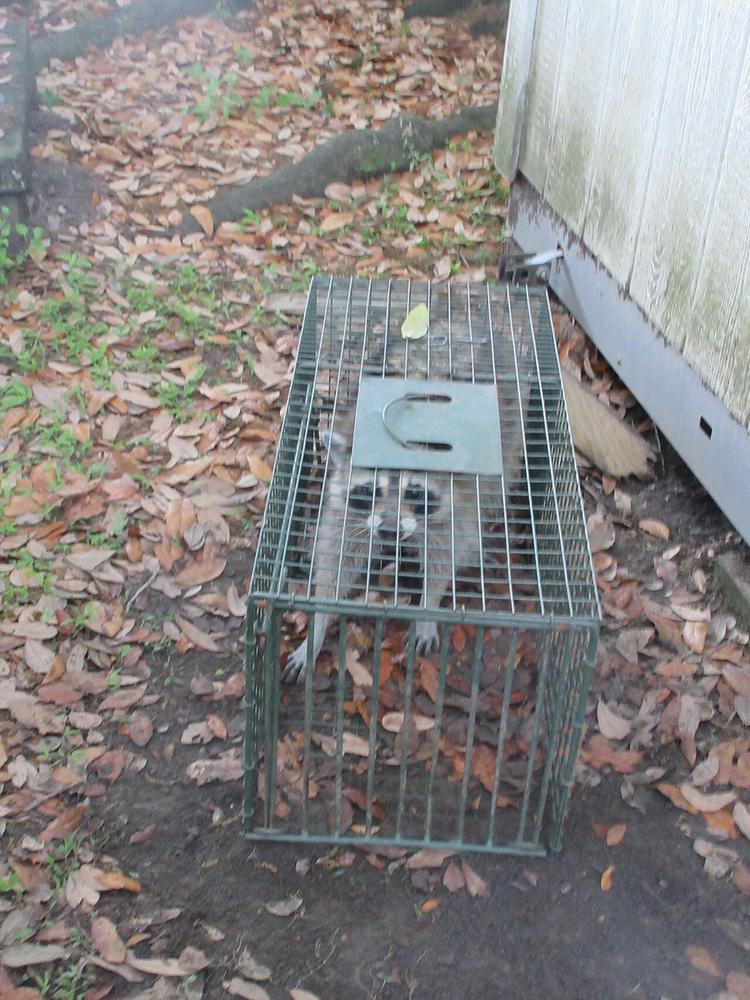 Legal trapping in seasonLicense and season
Raccoons and opossums follow creek banks and the same trails every night. A licensed trapper sets a legal trap where tracks show they travel and checks it as often as the rules require.
Needs a hunting license and fur taker permit, in trapping season, with legal traps. Check this year's rules for trap types, marking and how often to check.
p. 99Raccoon hunters walk creek bottoms at night, often with dogs, and look for eyes shining in a light.
Needs a hunting license and fur taker permit, in season. Check this year's rules for night hunting.
p. 99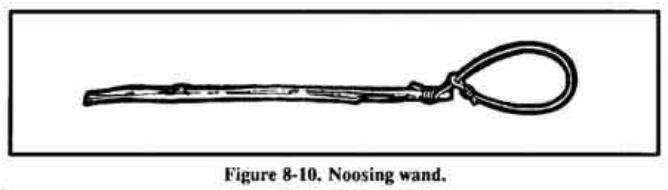 Noosing wandPractice only
A long pole with a wire loop at the thin end. The manual uses it at a den: hide nearby, and when the animal pokes out, slip the loop over its head and jerk it tight. Carry a stout club.
Not a legal way to take a furbearer in many states. Make the wand to learn it; do not use it on an animal.
p. 106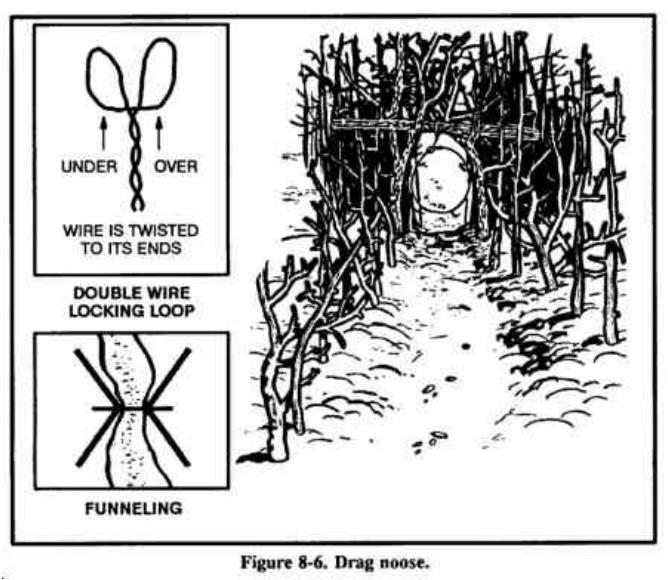 Drag noosePractice only
A loop hung from a crossbar laid on two forked sticks over a trail. The animal pulls the crossbar loose, drags it, and gets tangled in the brush. The manual says hang the loop above head height so a foot cannot step in it.
Snares are illegal in many states. Build the trigger on a table to learn how it works, then take it apart. Never set it outdoors.
p. 102Use a bait the animal knows that is not already all around. Scatter a few bits near the trap so the animal gets a taste and loses some of its fear. Guts from your last catch make good bait.
Bait is fine with a legal trap in season. Check this year's rules.
pp. 100 to 101Clean it, step by step
Wear gloves. Raccoon droppings can carry roundworm eggs, and both animals can carry other germs. Keep your hands away from your face (general food safety, not the manual).
p. 99Lay it on its back. Cut the skin from the throat to the tail, around the sex organs, with the blade edge up under the skin.
p. 121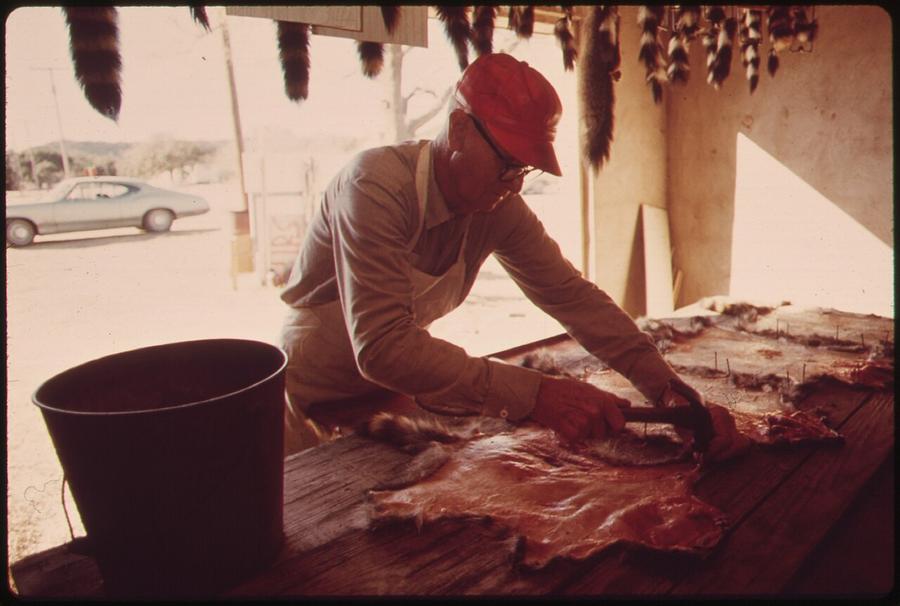
Cut along each leg from the foot to the body cut. Pull the skin off, cutting the tissue that holds it. Save the hide if you can use it.
p. 122The manual says to cut out the musk glands. On these animals they are small, waxy, bean-shaped lumps under each front leg and inside the back legs (where they are: general practice, not the manual). Cut them out whole; if you cut into them, the meat tastes bad.
p. 121Open the belly without cutting the guts. Pull the guts and chest organs out. Pinch off the bladder and cut below your fingers.
p. 122Check the liver. Smooth, wet and dark red is good. Throw away a spotted liver.
p. 122Cut off the head and feet. Trim off most of the fat; raccoon and opossum fat tastes strong.
p. 122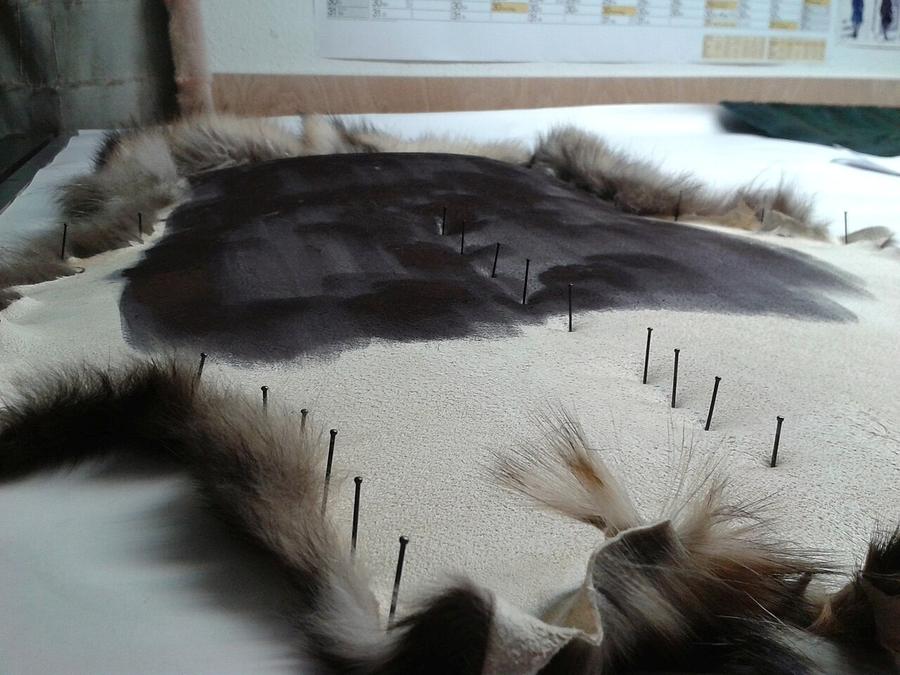
To keep the hide, scrape off all fat and meat and let it dry completely with no folds. The manual cuts dry skins into strips for rawhide lashing.
p. 162
Cook it, step by step
Cut the meat into legs and back.
p. 122Boil it first until it is tender, and pour off the first water. Scavengers should be boiled well; the manual boils scavenger birds at least 20 minutes, and the same care makes sense here.
p. 121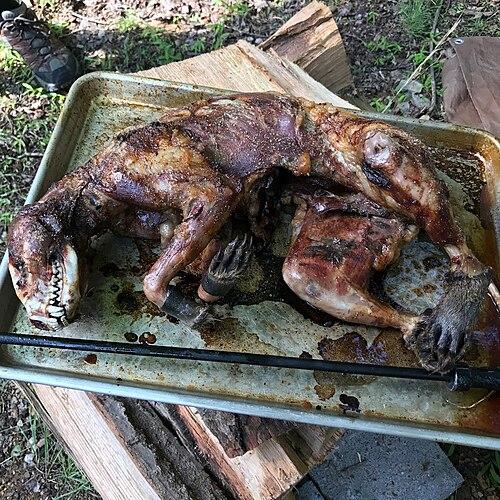
Then roast or bake it until well done. Opossum baked with sweet potatoes is a classic Southern dish (not the manual).
p. 123Cook to 165 F inside, all the way to the bone (general food safety, not the manual).
Military Survival and Rescue Guide, page 87
Stay safe
- The manual warns that scavengers like the opossum may carry diseases. Cook them very well. p. 99
- Do not eat an animal that seemed sick. Never touch a raccoon that acts tame, wobbly or strange; raccoons can carry rabies (rabies: general knowledge, not the manual). p. 299
- Both animals bite and fight hard when cornered. p. 99
The app shows what has been seen near your ZIP code, with photos, and can read a photo you take.