Red sky in the evening usually means fair weather tomorrow. Red sky in the morning means a storm may be coming. In most of the US, weather moves from west to east, and a red sunset means clear, dusty high-pressure air is to the west, headed your way.
Cold and weather · Cold and weather course
Read the weather from the sky
You can often see bad weather coming hours ahead from the clouds, the wind, smoke and animals. The old saying "red sky at night, sailors' delight; red sky in the morning, sailors take warning" is real science in most of the United States, and the Army survival manual lists the other signs.
Why this matters
Weather decides most survival situations. Seeing a storm coming hours ahead gives you time to build shelter, gather wood and get off exposed ground.
These signs are not magic. They come from how air pressure, moisture and wind move, and they work best when several agree.
What you need
- Just your eyes, ears and nose. A notebook to write down what you saw and what happened next helps you learn.
A few minutes each morning and evening.
Step by step
Learn four cloud types. Cirruscirrus Thin, wispy, feathery clouds very high in the sky. Usually a sign of fair weather. are thin, wispy streaks very high up, usually fair weather. Cumuluscumulus Puffy, flat-bottomed white clouds like cotton balls. Fair at first, but they can grow into storm clouds. are puffy, flat-bottomed cotton balls, fair at first. Stratusstratus A low, flat, gray sheet of cloud that covers the sky. It often brings drizzle or steady rain. are a low, flat gray sheet, which often means rain. Cumulonimbuscumulonimbus A tall thunderstorm cloud that towers up and spreads into a flat anvil shape at the top. are tall towers with flat anvil tops: thunderstorms.
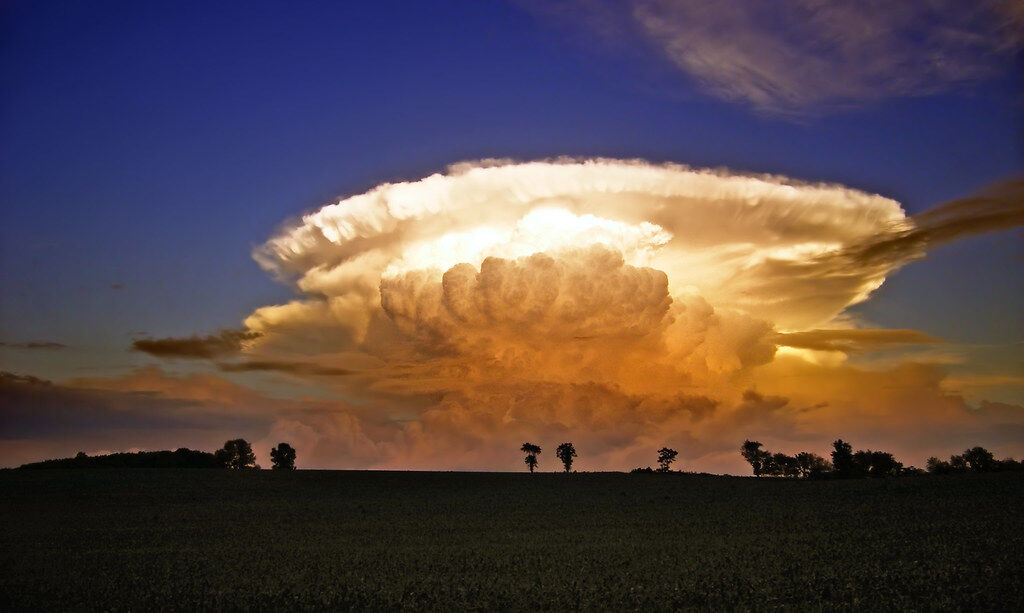
A cumulonimbus: the tall tower and flat anvil mean thunderstorms Watch cumulus clouds over the day. If they grow taller and darker by afternoon, piling up like mountains, a thunderstorm may follow. Plan to be off ridges and open ground by then.
Check the wind. Drop a few leavesdebris Dry leaves, pine needles, grass and ferns. Piled deep they trap still air, which is what keeps you warm. or watch the treetops to see which way it blows. Wind that keeps shifting direction means the weather is about to change.
Watch your campfire smoke. Smoke rising straight up in a thin column means fair weather. Smoke that stays low and flattens out means a storm is likely.
Watch birds and bugs. Birds and insects fly lower before rain because the air is heavy and damp. Many insects get busier before a storm.
Smell and listen. Before a storm, still, humid air makes smells stronger, like a swamp or flowers, and sounds carry farther than usual.
Use more than one sign. One sign alone can fool you. When the sky, the wind and the smoke all agree, believe them and get your shelter ready.
Tips from survival instructors
- A ring around the moon or sun, made by high thin clouds, often means rain or snow within a day or so.
- Dew on the grass in the morning usually means a dry day; no dew on a clear night can mean rain is coming.
Common mistakes
- Trusting one sign alone. The fix: look for two or three that agree.
- Ignoring building afternoon clouds. The fix: get off ridges and open ground before they turn dark.
- Forgetting the saying flips near the tropics. The fix: it works for most of the US, where weather moves west to east.
Practice it safely
For two weeks, write down the sky color at sunrise and sunset, the cloud types and the wind each day, then note the next day's weather. You will start to see the patterns in your own area.
Quick check
Tall clouds with flat anvil-shaped tops are…
- Cirrus, fair weather
- Cumulonimbus, thunderstorms
- Fog
Show the answer
Cumulonimbus, thunderstorms
Take the quiz and earn the badge
The app checks your answers, keeps your place in the Cold and weather, and works with no signal once saved.
Before you rely on thisA learning tool, not a replacement for training. In an emergency, call 911.
Sources
Photo credits
Photo: Nicholas_T, CC BY 2.0, source