When thunder roars, go indoors. Head for a building or a hard-topped vehicle as soon as you hear thunder. Then wait 30 minutes after the last thunder before going back out.
Cold and weather · Cold and weather course
If you can hear thunder, you are close enough to be struck. The only truly safe places are a solid building or a hard-topped car. Outdoors you can only lower the risk, so the real skill is getting off high, open ground before the storm arrives.
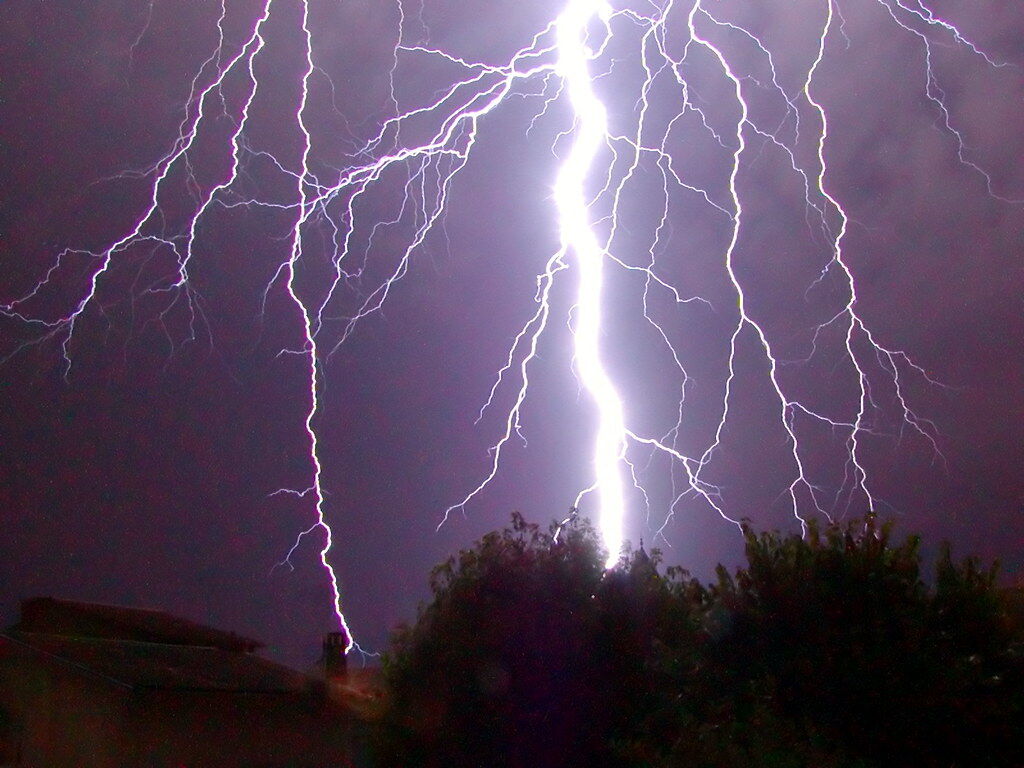
Lightning kills and injures people outdoors every summer, most often on ridges, near water and in open fields. Many were heading to shelter too late.
The danger starts before the rain does: lightning can strike miles ahead of the storm.
A minute to learn the rules; the plan takes a few minutes at the trailhead.
When thunder roars, go indoors. Head for a building or a hard-topped vehicle as soon as you hear thunder. Then wait 30 minutes after the last thunder before going back out.
Tents, picnic shelters, dugouts and caves near the entrance do not protect you. Neither do rubber boots or a raincoat.
Get off peaks, ridges and hilltops, and out of open fields. Stay away from tall, lone trees, which draw strikes. In a forest, go to a stand of shorter trees.
Get away from water, wet ropes and metal: lakes, streams, fences, polespoles Dead, straight sticks about as thick as your wrist and 2 to 3 meters long. Dead standing wood is best: dry, and it snaps clean. and metal trekking poles.
In a group, spread out, several body lengths apart, so one strike cannot hurt everyone and the others can help.
If you are caught out with nowhere to go, go to the lowest ground nearby, like a valley or ravine, away from water. This only lowers the risk a little; keep moving toward shelter when you can.
If someone is struck, they do not carry an electric charge and are safe to touch. Call 911, start CPR if they are not breathing, and treat burns.
Plan ahead: check the forecast, start hikes early, and be off summits and ridges by early afternoon in thunderstorm season.
Before each summer hike, look at the forecast and pick the turnaround time when you will head down from high ground. Practice counting the seconds between flash and thunder; under 30 seconds means get to shelter now.
Is a tent safe from lightning?
No; get to a building or hard-topped car
The app checks your answers, keeps your place in the Cold and weather, and works with no signal once saved.
Before you rely on thisA learning tool, not a replacement for training. In an emergency, call 911.