No mirror? Polish a canteen cup, a belt buckle or any shiny metal or glass until it reflects the sun. Anything that reflects sunlight can flash. The cleaner and flatter the surface, the stronger the flash. Test it: if you can throw a bright spot of light onto a wall or the ground, it will work.
Signals and rescue · Signals and rescue course
Mirror, whistle and flashlight
On a sunny day a mirror is the best signaling device you can carry; pilots have reported flashes from 100 miles (160 kilometers) away. A whistle carries a mile. Both only work if you practice now and keep them where you can reach them.
Why this matters
A mirror sends the sun's light a very long way. The manual says pilots have reported seeing mirror flashes up to 100 miles (160 kilometers) away when conditions are ideal. On a sunny day it is the best signalsignal Anything in threes means help: three fires, three whistle blasts, three piles of rocks. you can carry, and it weighs almost nothing.
A whistle is for people closer to you, like searchers on foot. Your voice gets tired and hoarse quickly; a whistle takes very little breath and carries much farther. It has been heard about 1 mile (1.6 kilometers) away.
Both only help if you can reach them fast and already know how to use them. The manual tells you to practice now and to always have a visual signal (something seen) and a sound signal (something heard) ready at the same time.
What you need
- A signal mirror, or any shiny metal or glass: a polished cup, a belt buckle, a phone screen or a CD.
- A cord to wear the mirror around your neck.
- A whistle. A store-bought whistle carries farther than whistling with your lips.
- A flashlight or strobestrobe A light that flashes very brightly on and off. Easy to spot at night from far away. light for night.
- No gear at all? You can still use three shouts, three bangs or three of anything as a call for help.
Step by step
Practice aiming now, not when you need it. A purpose-made signal mirror has instructions on the back; follow them. Hold the flash on one spot rather than waving it around. Aiming is the hard part, and a flash that misses the plane does nothing. A real signal mirror has a sighting hole and instructions printed on the back for aiming. Holding the flash steady on one spot gives a searcher a light to follow, while waving it around scatters it.
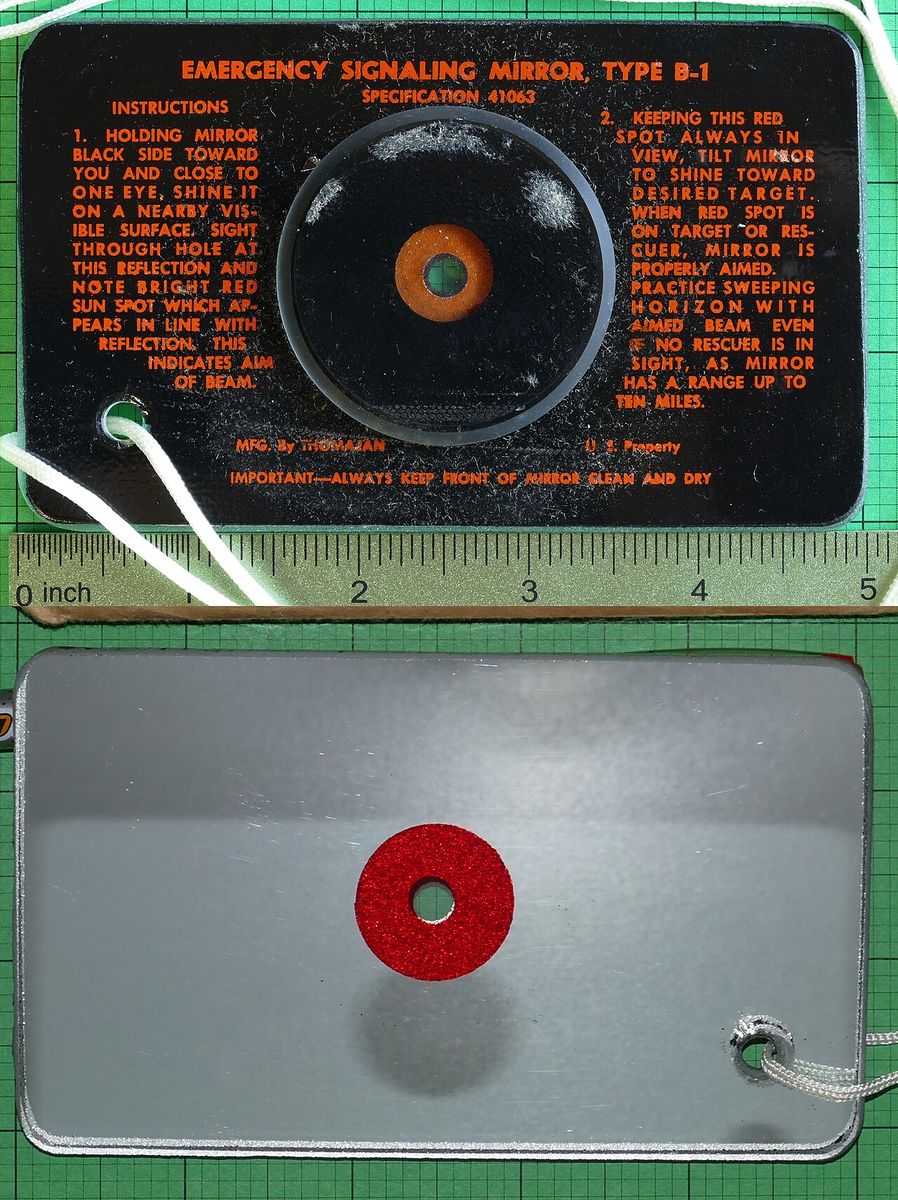
A purpose-made signal mirror has the aiming instructions on its back Wear the mirror on a cord around your neck so it is ready at once, with the glass side against your body so it does not flash when you do not mean it to. A mirror buried in your pack is no use when a plane flies over and is gone in a minute. Wearing it means you can grab it right away. Keeping the glass side against your chest stops stray flashes that waste attention.
When no aircraft is in sight, sweep the horizon with the flash. If you hear a plane but cannot see it, flash toward the sound. Haze, ground fog and heat shimmer hide flashes, so get to the highest point you can. Sweeping means slowly moving the flash back and forth along the line where the sky meets the land. Someone far away may see it even if you cannot see them. Haze and heat shimmer near the ground hide flashes, so climbing higher gives you a clearer line.
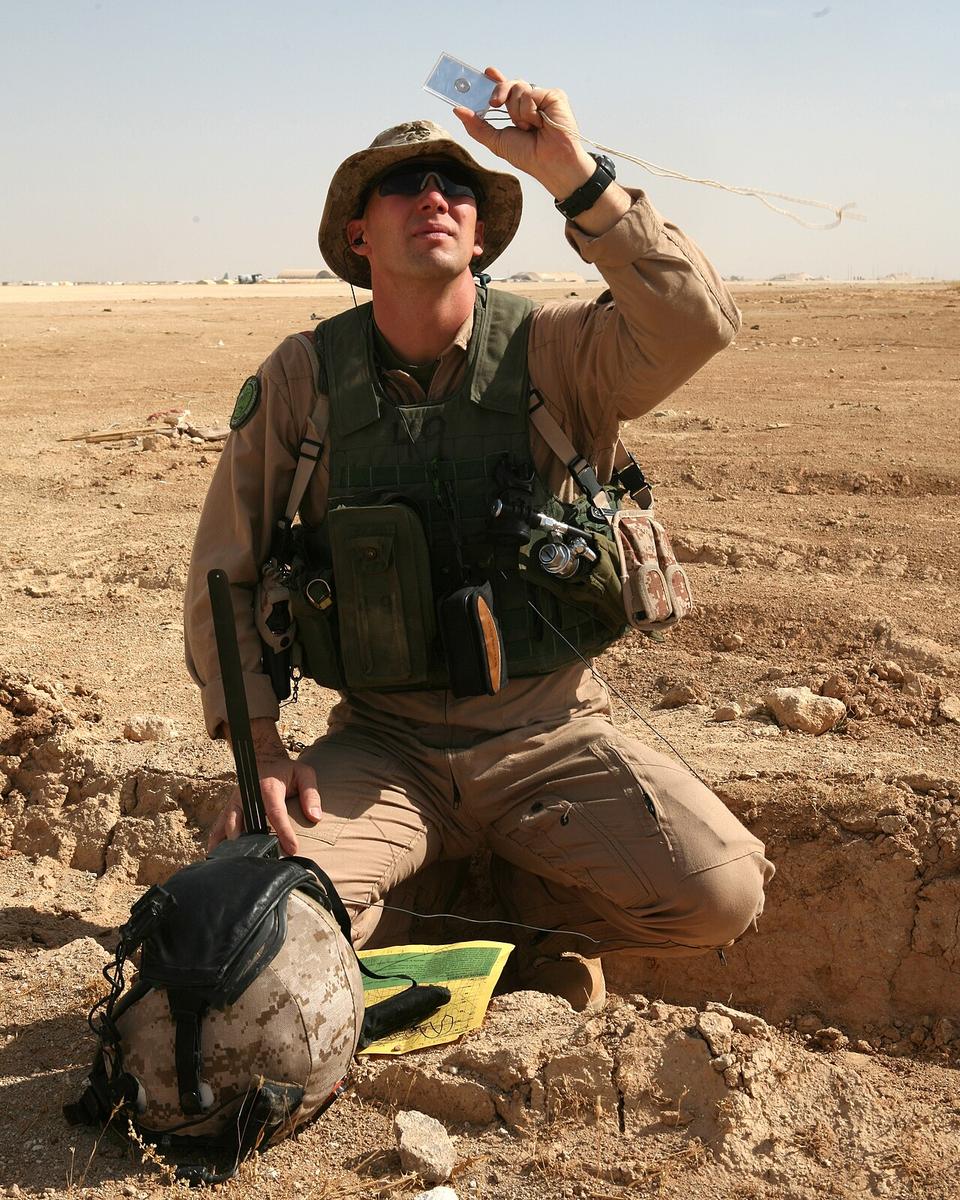
Sweep the horizon with the flash when no aircraft is in sight Do not flash rapidly; a pilot can mistake quick flashes for gunfire. Do not hold the beam in the cockpit for more than a few seconds; it can blind the pilot. Pilots are trained to be careful of anything that looks like gunfire, and fast flashes can look like it. A strong flash held on the pilot's window can dazzle them while they are flying. Steady and brief is what you want.
At night, a flashlight or strobe can send SOSSOS The world’s distress signal: three short, three long, three short, in flashes, sounds or marks on the ground. to an aircraft: three short, three long, three short. A strobe flashes 60 times a minute. A light works at night when a mirror cannot. Use the same SOS pattern as with a flag: three short, three long, three short, then repeat. A strobe is a light that blinks by itself, about once a second.
A whistle is excellent close up. In documented cases one has been heard 1 mile (1.6 kilometers) away, and a manufactured whistle carries farther than your own. Three blasts means help. A whistle blast is sharp and travels farther than a shout, and it does not wear out your voice. Three blasts with a pause, repeated, says you need help. Keep it on a cord where you can reach it, like the mirror.
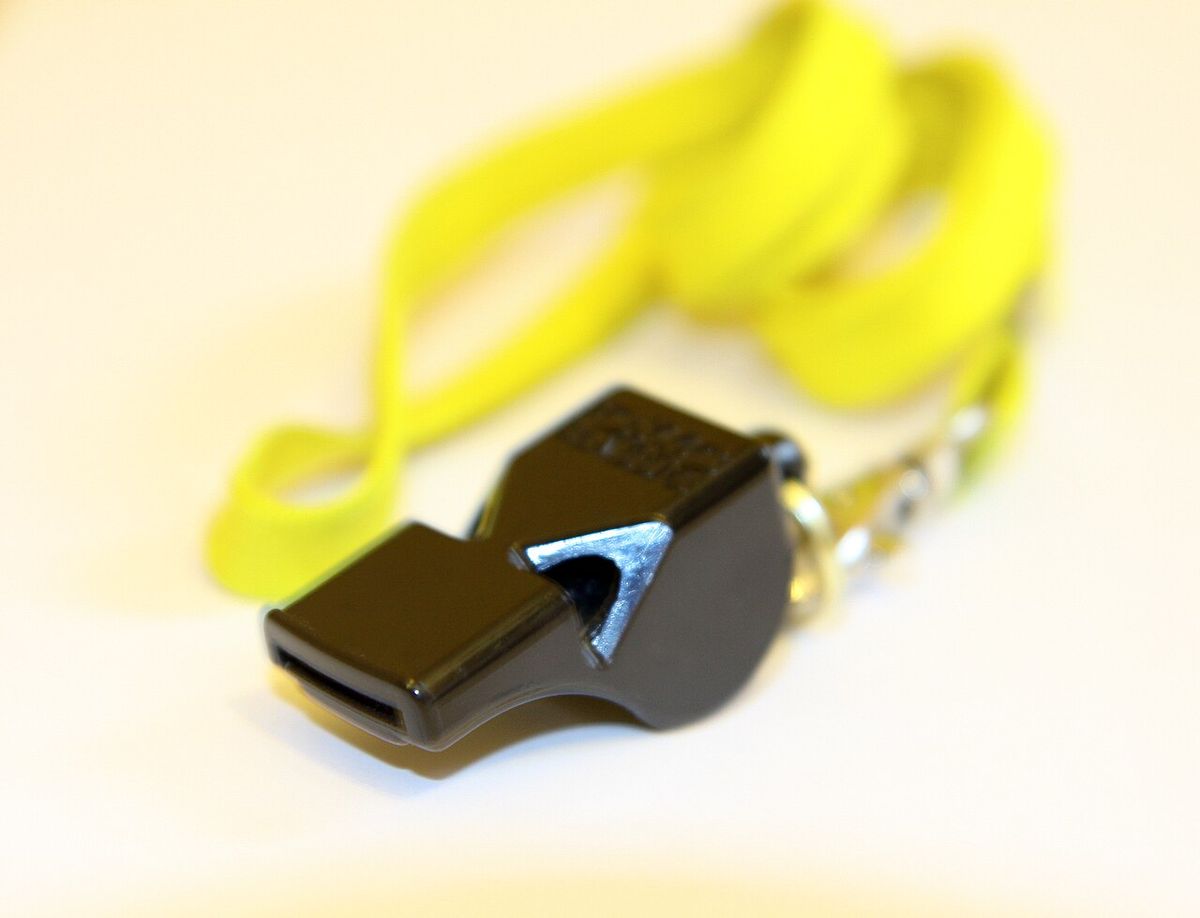
A whistle carries farther than your voice: blow three times Three shots at distinct intervals is also a recognized distress signal where it is safe and legal to fire. Gunshots carry far, but only someone who already knows how to handle a gun safely, where it is legal, should even think about this. For most people a whistle is the better sound signal.
Always have a visual signal and a sound signal ready at the same time, and know how to use each one before you need it. Searchers may see you before they hear you, or hear you before they see you. Having one of each ready doubles your chances. If you have practiced, you will not fumble when it counts.
Avoid any signal that can hurt you. The manual warns that a flareflare A bright, burning light shot into the air or held in the hand to signal for help. fired in front of a search plane can be mistaken for enemy fire and tells you to have a second signal ready; the same care applies to anything that burns or explodes. A signal that burns or explodes can hurt you or start a fire, and from the air it can be mistaken for something dangerous. A mirror, a whistle and a light are safe and can be used over and over.
Tips from survival instructors
- A whistle carries farther than a shout and takes almost no energy. Three blasts means help.
- Practice aiming a signal mirror on a sunny day: hold up two fingers in a V around the target and keep the light spot on them.
Common mistakes
- Flashing the mirror rapidly. Fix: hold the flash steady; quick flashes can look like gunfire to a pilot.
- Holding the beam on the cockpit. Fix: a few seconds only, because it can blind the pilot.
- Keeping the mirror or whistle deep in a pack. Fix: wear both on cords around your neck, mirror glass side in.
- Signaling from low ground on a hazy day. Fix: get to the highest point you can, and flash toward the sound of a plane if you cannot see it.
- Never practicing. Fix: the manual says practice now, not when you need it.
Practice it safely
On a sunny day in your yard, practice throwing the mirror's spot of light onto a tree trunk or a fence post across the yard and holding it steady there. Then try a target that is farther away. If you have a signal mirror, follow the instructions on the back. Never aim a mirror at aircraft, at drivers, or at anyone's eyes when you practice.
Practice three whistle blasts outdoors, then have a friend walk away and tell you when they can no longer hear it. In a busy park, let people near you know it is practice, since three blasts means help. At night in the yard, practice SOS with a flashlight: three short, three long, three short.
Quick check
How far has a whistle been heard?
- About 100 feet
- About 1 mile (1.6 kilometers)
- About 10 miles
Show the answer
About 1 mile (1.6 kilometers)
Take the quiz and earn the badge
The app checks your answers, keeps your place in the Signals and rescue, and works with no signal once saved.
Before you rely on thisA learning tool, not a replacement for training. In an emergency, call 911.
Sources
- US Army Survival Manual, pages 260 and 262 to 267 (pen flares, signal mirror, flashlight and strobe, whistles, gunshots, SOS)
- Military Survival and Rescue Guide, pages 33 and 35 (signal mirror, sweep the horizon, audio signals)
- US Army Survival Manual, pages 260 (practice first, have visual and audio signals ready), 263 to 264 (pen flare caution, mirror or shiny objects, wearing the mirror, mirror cautions, haze, 160 kilometers)
- US Army Survival Manual, pages 265 and 267 (flashlight and strobe, whistles, gunshots, SOS)
- Military Survival and Rescue Guide, pages 33 and 35 (make a mirror from shiny metal or glass, sweep the horizon, audio signals)