Woods first. A wooded site gives timber, firewood and shelter from the wind, and the snow under a big evergreen or a fallen tree is shallow enough to dig out and line with cut branches. In open country, snow is the only building material, and it has to be deep and well packed. Avoid newly fallen, powdery or loose snow. Trees make everything easier: wood for fire, branches for a bed, and shelter from wind. Under a big evergreen or a fallen tree the snow is shallow, so digging is fast. In the open, test that the snow is deep and packed hard. If a handful falls apart like sugar, it is too loose to build in.
Shelter · Shelter course
Snow trench and snow cave
Snow is an insulatorinsulation Anything that traps still air and slows heat from leaving: dry leaves, pine needles, snow, wool, a puffy jacket.. Dug into properly it keeps you out of the wind and far warmer than the air outside. The catch is that snow shelters take time and energy, you get wet building them, and a fire or stove inside can poison you. Here is how the two cold weather manuals build them.
Why this matters
Snow is full of trapped air, which makes it a good insulator. A shelter dug into snow keeps you out of the wind and can be far warmer inside than the air outside. When there are no trees, snow may be the only building material you have.
Snow shelters are hard work. You get wet digging, they take hours, and a roof that is too thin can fall in. The biggest danger is a flame inside with poor air flow, which makes carbon monoxidecarbon monoxide A colorless, odorless gas from any open flame or stove in a closed space. It can kill without warning; the one visible sign is cherry red lips and inner eyelids.. Done carefully, though, the manuals call the snow cavesnow cave A room dug into a deep snowdrift. Snow is full of trapped air, so it holds heat surprisingly well. one of the most effective shelters there is.
What you need
- Deep, well-packed snow. Newly fallen, powdery or loose snow will not hold a roof.
- Something to dig with, such as a shovel. Hands alone are slow and will get cold and wet. A long stick or polepoles Dead, straight sticks about as thick as your wrist and 2 to 3 meters long. Dead standing wood is best: dry, and it snaps clean. to test snow depth and to keep a vent hole clear.
- A tarp, poncho, skis or branches for a trench roof, branches or boughsboughs Leafy evergreen branches (hemlock, pine, spruce, fir). Layered on a roof they shed rain; piled inside they make a dry bed. for a bed, and a dry change of clothes for after you dig.
The MWTC handbook estimates a snow wall at about 30 minutes, a tree-pit or fallen-tree shelter at 1 to 2 hours, a snow trench at 2 to 3 hours, and a snow cave at about 3 hours.
Step by step
Snow trench: the idea is to get below the snow and the wind and let the snow insulate you. Dig a trench long enough to lie in. If the snow is packed hard enough to cut blocks, use blocks as the roof. If not, lay a poncho or other material over skis, poles or branches. Boughs can cover the roof and make the bed. A trench is a slot in the snow, long enough to lie in, with a roof over it. You lie below the wind, and the snow walls hold your heat. If the snow is hard enough to cut into blocks that keep their shape, lean them together as a roof. If not, stretch a poncho or tarp over skis, poles or branches.
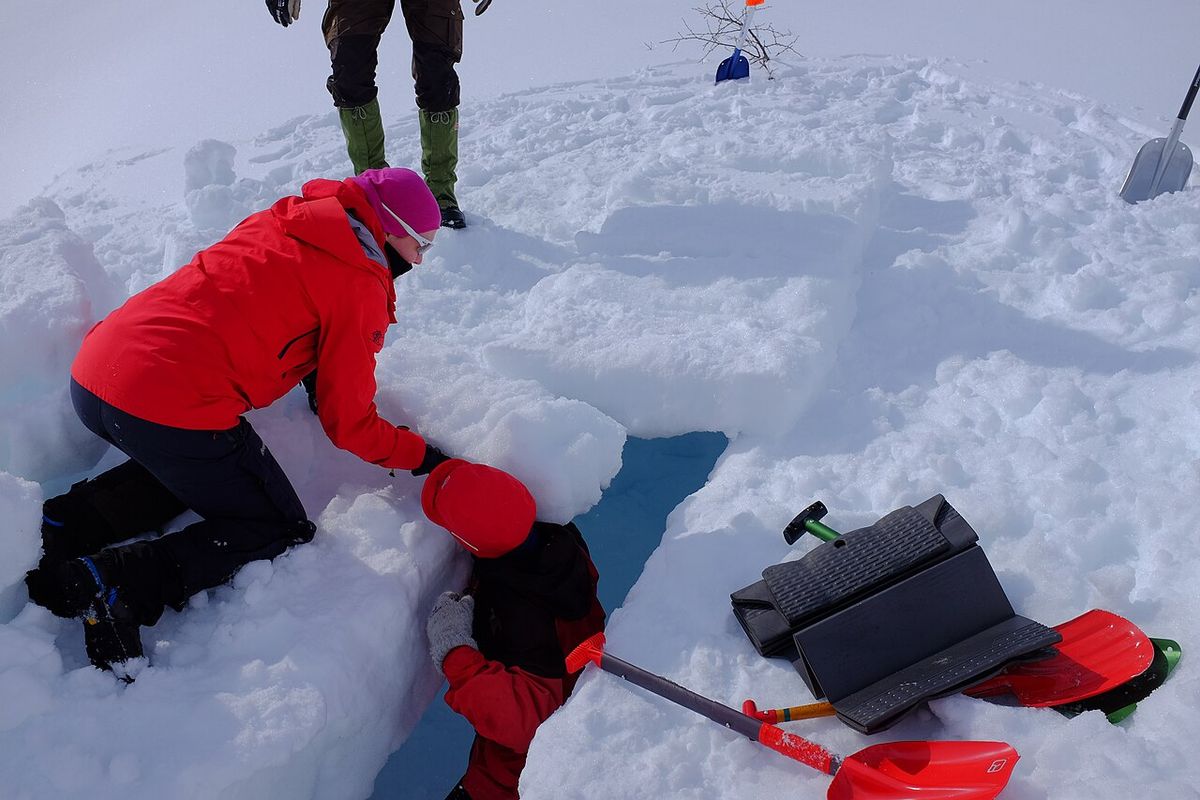
Packed snow that holds a block edge can roof a snow trench Build only one entrance, and use a snow block or your pack as a door. Blocking the entrance keeps the heat in and the wind out. Every opening lets heat out and wind in. One entrance with a door, such as a snow block or your pack, is the rule. You know the door works when the inside stops feeling drafty.
Snow cave: you need a drift about 10 feet (3 meters) deep, and FM 31-70 says at least 8 feet (243 centimeters). Drifts pile up on the lee sidelee side The side sheltered from the wind. Snow drifts pile up there, which is where you dig a snow cave, and where cornices overhang a ridge. of a steep ridge or riverbank. Test the depth with a long saplingsapling A young, thin tree, usually thinner than your wrist. Springy and easy to bend. before you start digging. A drift is snow the wind has piled up deep, and the deepest drifts form on the sheltered (lee) side of a steep ridge or riverbank. The manuals give different minimums: FM 21-76 asks for about 10 feet (3 meters), FM 31-70 at least 8 feet (243 centimeters), and the MWTC handbook at least 6 feet (about 1.8 meters) of well-packed snow. FM 31-70 tests depth with a sharpened sapling about 12 feet (365 centimeters) long.
Pick the entrance so the wind will not blow into it or drift it shut. Burrow a small tunnel straight in about 3 feet (1 meter), then dig the chamber out to the right and left so it lies across the tunnel. You will get wet digging, so wear the least clothing you can and keep a dry set for afterward. Dig the tunnel in and then out to the sides, so the room lies crosswise to the entrance. That keeps the wind from blowing straight in. Digging makes you sweat, and sweat-soaked clothes lose their warmth, so strip to the fewest layers you can and keep a dry set to change into afterward.
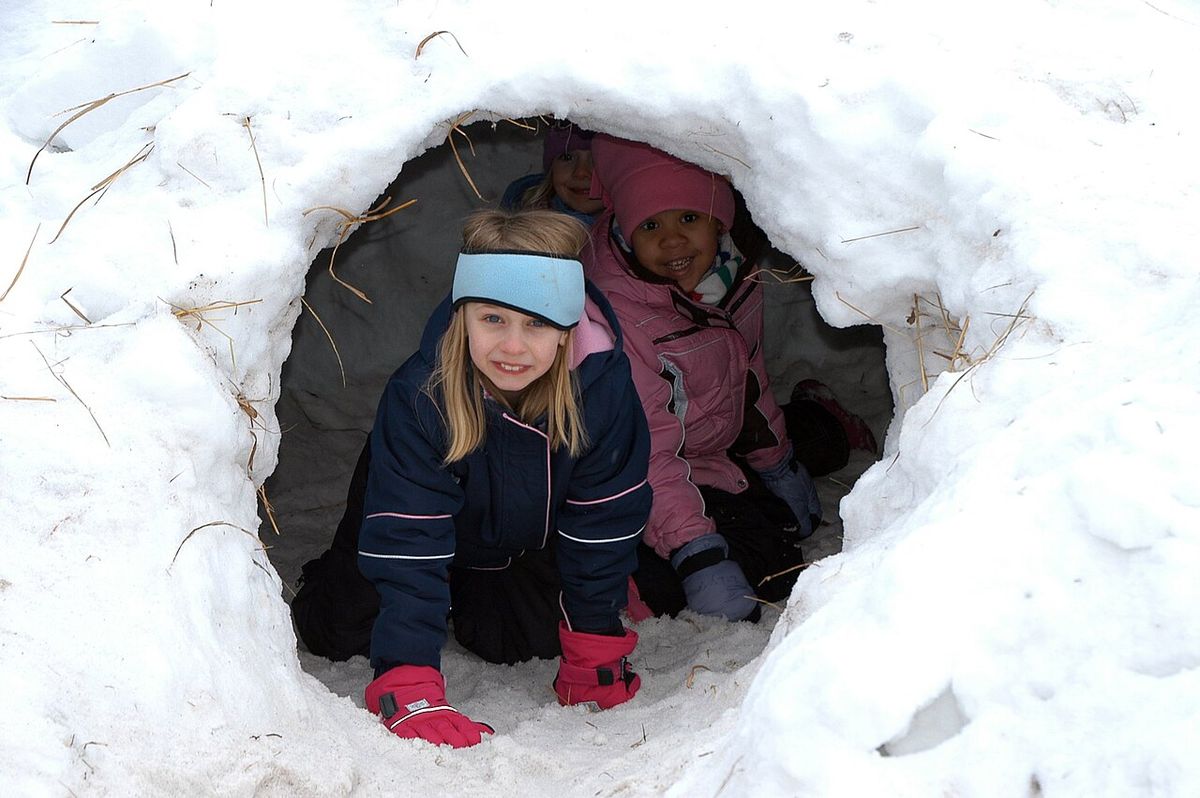
A small entrance tunnel dug into a drift, with the chamber beyond Keep the roof arched. An arch is strong, and melt water runs down the curved sides instead of dripping on you. Make the walls and roof at least 1 foot (30 centimeters) thick, and the ceiling high enough to sit up under. A dome shape holds itself up and lets drips rungame trail A narrow path worn through grass or brush by animals using it over and over. A trap goes on a trail an animal already uses. down the walls instead of falling on you. Keep the walls and roof at least 1 foot (30 centimeters) thick. The MWTC handbook says if you see a bluish color showing through the roof, stop digging: the snow is too thin to hold. Do not walk on top of the cave; FM 31-70 warns it can collapse.
Build the sleeping platform higher than the entrance. Warm air rises to the platform and cold air sinks into the tunnel. Separate the platform from the walls, or dig a small trench between them, so melting snow does not wet you and your gear. Use the low entrance area for cooking. Warm air rises and cold air sinks, so sleeping higher than the top of the entrance keeps you in the warmest air. Cooking and gear go in the low part near the entrance. FM 21-76-1 gives a simple test: unless you can see your breath, the shelter is too warm and will start melting and dripping.
Put in a ventilation shaft, always. Carbon monoxide from any open flame is colorless and odorless and can kill without warning; the one visible sign is cherry red lips, mouth and inner eyelids. Never fall asleep with a stove or candle burning. Headache, pounding pulsepulse The beat of the heart you can feel in the wrist or neck. Count beats for 15 seconds and multiply by 4 for beats per minute. or burning eyes: get into fresh air at once. The vent is a hole through the roof that lets fresh air in. The MWTC handbook digs it at an angle above the entrance and leavesdebris Dry leaves, pine needles, grass and ferns. Piled deep they trap still air, which is what keeps you warm. a stick in it so you can clear it from inside. FM 31-70 says check vents every 2 or 3 hours so snow or ice does not clog them. If anyone shows the signs listed in the step, get everyone into fresh air at once and call 911 if you have signalsignal Anything in threes means help: three fires, three whistle blasts, three piles of rocks.. This app is a learning tool, not medical training.
Keep it small. A shelter so big that it steals body heat instead of saving it is the fatal error in the cold. And never sleep directly on the snow or ground: lay down pine boughs, grass or other insulation first. The manual calls a shelter so big that it steals body heat instead of saving it a fatal error in the cold. Small is warm. Lay a thick layer of boughs, grass or other material under you, because lying on snow or ground pulls your heat away.
No drift deep enough? Pile snow into a mound large enough to dig out and make the same cave in it. In extreme cold do not shelter in anything metal, such as a wrecked vehicle; it conducts away what little heat you make. Pile and pack snow into a mound big enough to dig a room out of, then hollow it the same way, with the same thick walls, raised bed and vent. Metal like a car or aircraft body pulls heat away from you in extreme cold, so do not use it as a shelter then.
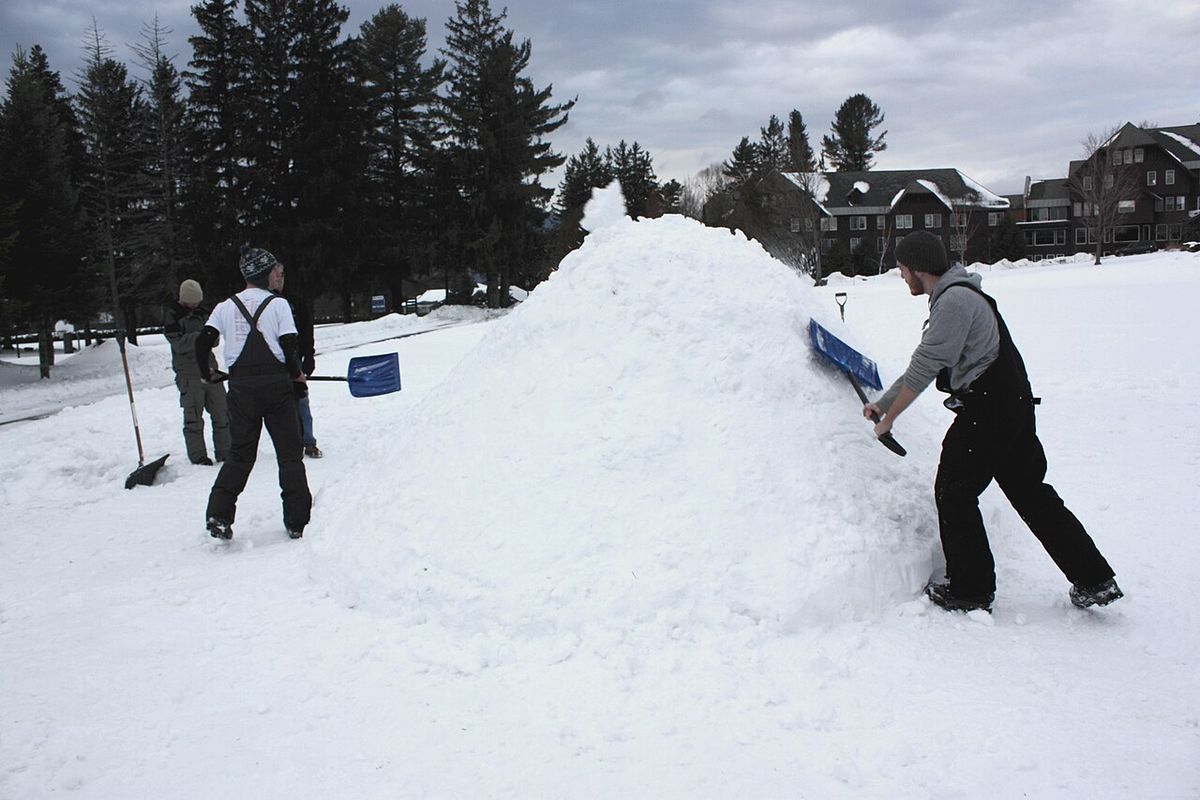
No drift? Pile snow into a mound, let it set, then dig it out
Tips from survival instructors
- Cold air sinks. Make your sleeping shelf higher than the entrance so the warm air stays where you are.
- Poke an air hole in the roof and keep it open. A candle or stove in a sealed snow shelter can poison you.
Common mistakes
- Building in loose, fresh powder. The fix: find deep, well-packed snow or a drift, and test the depth first.
- A roof that is too thin or flat. The fix: keep it arched and at least 1 foot (30 centimeters) thick; stop if you see blue light through it.
- Digging in all your warm clothes. The fix: dig in the fewest layers you can and keep a dry set for afterward.
- No vent, or a clogged vent. The fix: always put in a vent, keep a stick in it, and check it every 2 or 3 hours.
- Falling asleep with a candle or stove burning. The fix: put out every flame before sleep; carbon monoxide gives little or no warning.
- Making the cave too big. The fix: dig only as much room as you need to sit up and lie down.
Practice it safely
After a big snowfall, practice in your own yard in daylight with an adult. Start with a snow wall or a short trench, then try a small cave in a deep, packed pile. Never dig alone and never go inside unless someone stays outside. The MWTC handbook posts a lookout outside a snow cave in case it collapses. Build away from roads and driveways where plows push snow.
Never take a candle, stove or any flame into a practice shelter. Check your roof thickness by pushing a marked stick through from outside. When you are done, knock the shelter down so no one crawls into a weak roof later.
Quick check
You wake in a snow cave with a pounding headache and your partner's lips look cherry red. What is it?
- Altitude
- Carbon monoxide: get into fresh air at once
- Too little water
Show the answer
Carbon monoxide: get into fresh air at once
Take the quiz and earn the badge
The app checks your answers, keeps your place in the Shelter, and works with no signal once saved.
Before you rely on thisA learning tool, not a replacement for training. In an emergency, call 911.
Sources
- US Army Survival Manual, pages 196 to 200 (cold weather shelters, carbon monoxide, snow cave, snow trench)
- Army Cold Weather Manual, chapter 3 pages 9 and 12 to 13 (improvised shelters, snow cave construction)
- US Army Survival Manual, pages 196 to 200 (cold weather shelters, metal, ventilation, carbon monoxide, snow cave, snow trench, lean-to, fallen tree and tree-pit shelters)
- Military Survival and Rescue Guide, page 61 (snow as insulation, air vent, see your breath rule)
- Army Cold Weather Manual, chapter 3 pages 9 and 12 to 13 (deep and well-compacted snow, snow cave location, construction, 243 centimeter drift, depth test, ventilation checks, roof collapse)
- Army Cold-Weather Survival Handbook, page 62 (snow trench, snow wall)
- Marine Corps Winter Survival Handbook, pages 04-4 to 04-10 (snow cave: 6 feet of compacted snow, blue light in the roof, angled vent with a pole, wet from digging, lookout; shelter time table)