← Outdoor Survivalist Trainer Your area

Shelter · Shelter course

A bed that keeps the ground from stealing your heat

At rest you lose as much as 80 percent of your body heat to the ground. A roof without a bed under it is half a shelter. This lesson covers the bed inside any shelter, a sleeping bag made from what you have, and the swamp bed that gets you up out of standing water.

Why this matters

The ground is cold, and it is always touching you when you lie down. The manual says that at rest you can lose as much as 80 percent of your body heat to the ground. That is why a person under a good roof can still shiver all night, and why a thick bed is half of every shelter.

The fix is the same in every climate: put something full of trapped air between you and the ground. Leavesdebris Dry leaves, pine needles, grass and ferns. Piled deep they trap still air, which is what keeps you warm., grass, pine needles and boughsboughs Leafy evergreen branches (hemlock, pine, spruce, fir). Layered on a roof they shed rain; piled inside they make a dry bed. all work, and more is better. Where the ground is wet or water stands, the manual raises the whole bed up on polespoles Dead, straight sticks about as thick as your wrist and 2 to 3 meters long. Dead standing wood is best: dry, and it snaps clean. so you stay dry.

What you need

  • For a ground bed: nothing but your hands and a big pile of dry leaves, grass, pine needles or boughs.
  • For a homemade sleeping bag: two layers of cloth, such as a tarp, a blanket or parachute cloth, and dry leaves, pine needles or moss to stuff between them.
  • For a swamp bed: four trees in a rectangle or four strong poles, more poles for the frame, cord or vines to tie them, and leaves or grass for the top.

Step by step

  1. The rule in every climate: never sleep directly on the ground. Lay pine boughs, grass, leaves, pine needles or other insulatinginsulation Anything that traps still air and slows heat from leaving: dry leaves, pine needles, snow, wool, a puffy jacket. material under you. The ground pulls heat out of you faster than the air does. Air trapped in a fluffy layer slows heat leaving your body. Bare ground does not trap air, so it pulls heat out fast, especially when you lie still. You know your bed is thick enough when you cannot feel the cold of the ground through it after lying there a while.
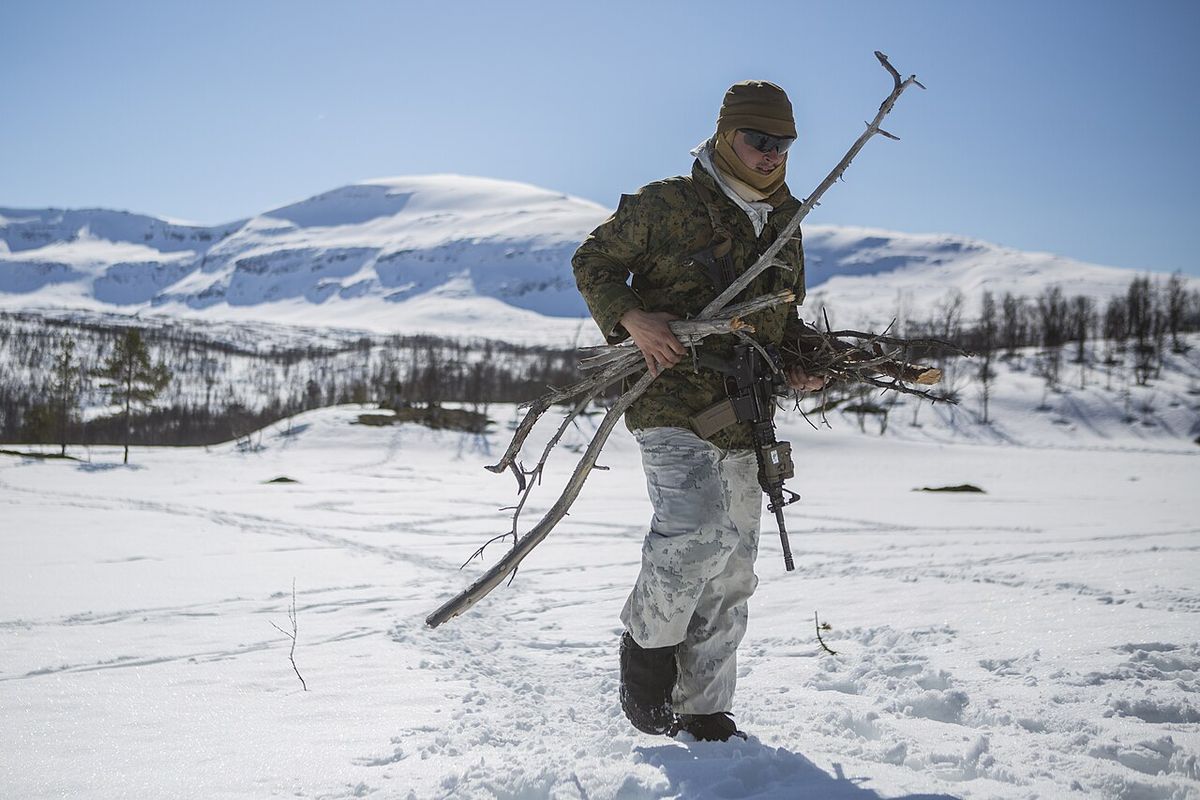
    A person in winter gear carrying an armload of cut evergreen branches across snow
    Evergreen boughs gathered for bedding: never sleep on bare ground
  2. In a lean-to, put straw, leaves, pine needles or grass inside for bedding. In a debris hutdebris hut A small shelter of sticks with a thick pile of leaves on top and inside. Your body heat warms the tiny space. the manual calls for a layer 1 foot (30 centimeters) deep. More is better. A bed gets crushed flat under your weight, so it needs to start thick. The debris hut bed is 1 foot (30 centimeters) deep before you lie on it. Check it after the first night and add more where it has packed down.

  3. No sleeping bag? Make one from parachute cloth or any similar material with dry leaves, pine needles or moss stuffed between two layers. If you have a down bag, keep the down dry; wet, it loses most of its insulation. Stuffing dry material between two layers of cloth traps air the same way a store-bought bag does. Down, the fluffy feathers inside many sleeping bags, loses a lot of its warmth when wet, so keep a down bag dry under a roof and off wet ground.

  4. Swamp bed: in a marsh, a swamp, or anywhere the ground is wet or water stands, a raised bed keeps you out of the water. Find four trees that form a rectangle, or cut four poles (bamboo is ideal) and drive them firmly into the ground. They must be far enough apart and strong enough to carry your height and weight, gear included. A swamp bed is a platform on four corner posts that lifts you out of wet ground. Before building, the manual says to think about the weather, wind, tides and the materials you have. Shake each post hard; if it moves, set it deeper or find a sturdier one.

  5. Cut two poles that span the width of the rectangle, strong enough to hold you, and tie them to the trees or posts. Set them high enough above the ground or water to clear tides and high water. These two side poles carry all your weight, so they must be strong. Tie them on above the highest water you might see, such as after a rainstorm or a high tide, not only above today's water.

  6. Cut more poles that span the length. Lay them across the two side poles and tie them down. These poles make the floor of the bed. Lay them close together so you do not sag between them, and tie each one so it cannot roll. Sit on the frame and bounce gently before you trust it with your full weight.

  7. Cover the top of the frame with broad leaves or grass for a soft sleeping surface. Broad leaves or grass soften the poles and add a layer of insulation. Pile on enough that you do not feel the poles through it.

  8. Make a fire pad by laying clay, silt or mud on one corner of the bed and letting it dry before you light anything on it. Clay, silt or mud spread on one corner makes a fireproof pad so a small fire does not burn the wooden frame. It must dry completely first, because wet mud will not protect the wood.

  9. A simpler version uses the same four posts: lay sticks and branches lengthwise inside them until the pile is high enough to lift your sleeping surface above the water. This simpler version skips the raised frame. You stack sticks and branches inside the four posts until the top of the pile is above the water. Lie on it and check that you stay dry.

  10. In the cold, block the shelter entrance with a pack or snow block, brush snow and frostlast spring frost The average date the last freezing night happens in spring, and the first in fall. Between them, nights usually stay above 32°F. off your clothes before you crawl in, and change into dry socks for the night. Damp clothing in the bed is heat lost all night. Each of these keeps moisture away from you. The manual says brush off snow and frost before you go into a warm shelter, because it melts and soaks your clothes. Wash your feet and put on dry socks daily. If your boots are wet and you have nothing else, dry them between your sleeping bag shell and liner, where body heat helps.

Tips from survival instructors

  • The ground pulls heat out of you faster than the air does. Put more under you than on top of you.
  • Dry pine needles, leaves or grass work as bedding. Pile them thick, at least a forearm deep before you lie on them.

Common mistakes

  • Sleeping on bare ground under a good roof. The fix: always lay insulation under you first.
  • A thin bed that looks fine before you lie on it. The fix: start thick and add more after it packs down.
  • Letting a down bag get wet. The fix: keep it under cover and off wet ground.
  • Swamp bed side poles set too low. The fix: put them high enough to clear tides and high water.
  • Lighting a fire on a wet fire pad. The fix: let the clay or mud dry fully first.
  • Crawling into bed with snow on your clothes or in damp socks. The fix: brush off snow and frost outside and change into dry socks.

Practice it safely

On a cool fall evening, try this in your yard: lie on bare grass for a few minutes, then on a thick pile of raked leaves inside a cheap sleeping bag or blanket. Feel the difference. The manual itself suggests testing gear in an "overnight backyard" before going farther.

Make a stuffed sleeping pad from two old sheets or a large bag filled with dry leaves, and try a night in a backyard tent. For a swamp bed, practice tying the frame on posts in your own yard, a little off the ground, and sit-test it before you lie on it. In parks, use only fallen leaves and dead wood, check the rules, and clean up when you are done.

Quick check

You have a tarp roof over a flat dry spot and nothing else. What is missing?

  • A door
  • A thick layer of leaves, grass or boughs under you
  • A second tarp
Show the answer

A thick layer of leaves, grass or boughs under you

Take the quiz and earn the badge

The app checks your answers, keeps your place in the Shelter, and works with no signal once saved.

Before you rely on thisA learning tool, not a replacement for training. In an emergency, call 911.

Sources

Photo credits
Photo: U.S. Marine Corps photo by Lance Cpl. Larisa Chavez, Public Domain, source

More on shelter