Only make a fire where it is legal. Follow burn bans. Fire rules change with the season and the weather. Check posted signs and the park or campground rules every time, and skip the fire if there is a burn ban.
Fire · Fire course
Fire spot and fuel
Why this matters
A fire keeps you warm, dries wet clothes, boils water to make it safe, cooks food and lifts your spirits. In cold weather it can be the difference between a hard night and a dangerous one.
Fire can also go wrong fast. The manuals warn that it can start forest fires, burn your gear and shelter, and cause burns or carbon monoxide poisoningcarbon monoxide poisoning Poisoning from carbon monoxide, an invisible gas with no smell made by fires, stoves and engines in closed spaces. if it is inside a closed shelter. A careful spot, the right wood and a full put-out are what keep a fire helpful.
What you need
- Something to light it: matches, a lighter or a fire starter.
- Tindertinder The driest, finest material you have, which catches a spark or small flame: shredded inner bark, dry grass, birch bark curls, cattail fluff., kindlingkindling Pencil-thin dead twigs that catch from tinder and build the fire up. They should snap, not bend. and fuel woodfuel wood Dead wood from finger to wrist thick that keeps the fire going once the kindling has caught., which you gather by hand. No tools needed for small dead twigs.
- Water, or dirt and a stick, to put it out completely.
- A legal place to build it, like a fire ring at a campground.
Step by step
Pick a dry spot out of the wind, away from your shelter walls and overhanging branches. Wind blows sparks and makes a fire hard to control. FM 21-76 says to clear a circle at least 3 feet (1 meter) across down to bare soil so the fire cannot creep through dry leavesdebris Dry leaves, pine needles, grass and ferns. Piled deep they trap still air, which is what keeps you warm.. It also warns that fires can burn underground and pop up nearby, so do not build one too close to your shelter.
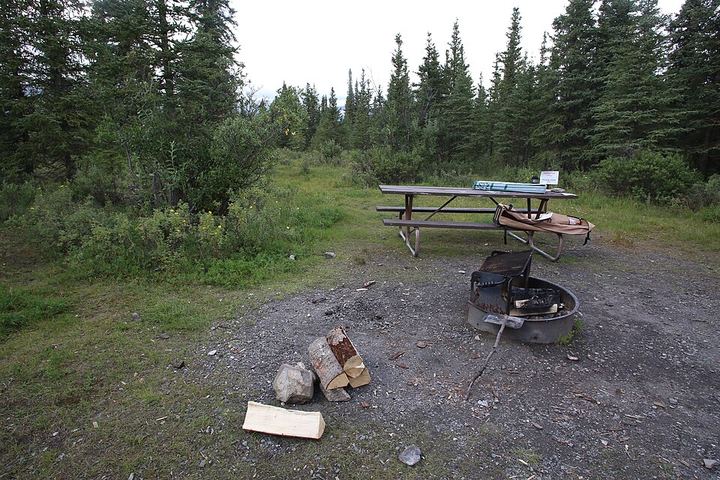
Bare ground, clear of brush and low branches Gather three piles before you start: tinder (dry grass, barkbark slabs Big sheets of bark peeled off a dead log. Laid like shingles, bottom row first, they shed rain. shreds), kindling (pencil-thin dead twigs), fuel (wrist-thick dead wood). Tinder is the fine, fluffy stuff that catches from a spark or match. Kindling is the small sticks that catch from the tinder, from pencil-thin up to about thumb-thick. Fuel is the bigger wood that burns long and steady. The MWTC handbook says gather a double handful of tinder for the fire, plus another double handful kept dry for the next morning.
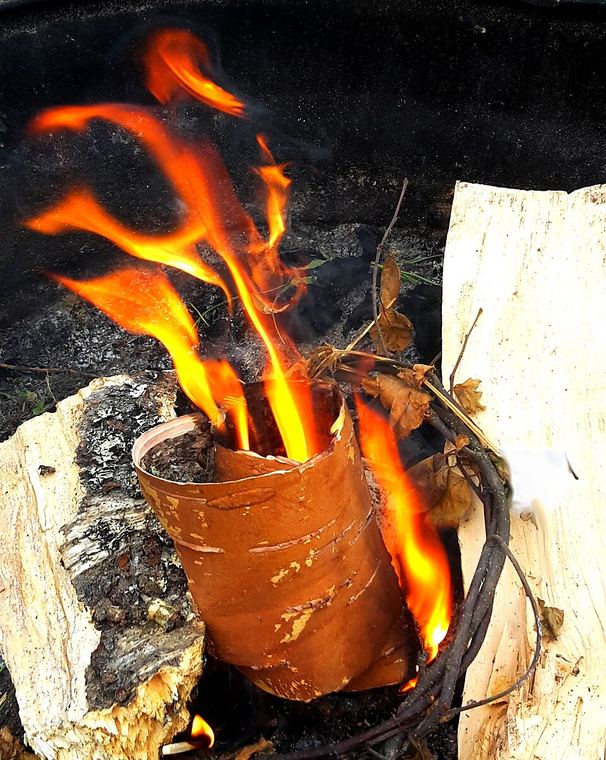
Tinder: birch bark catches fast, even when damp 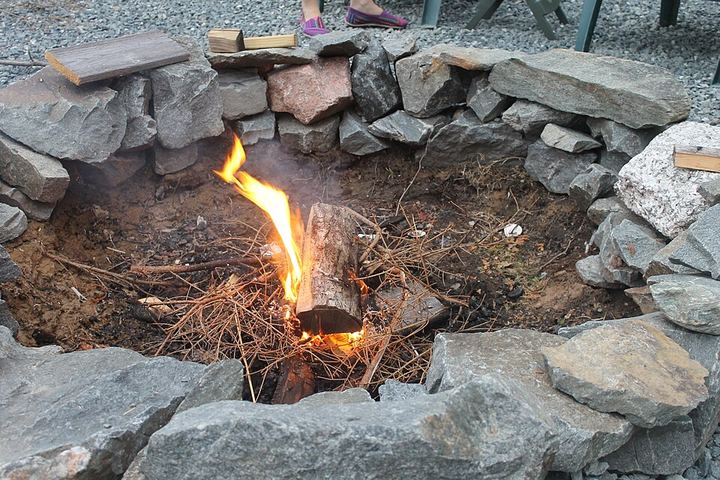
Kindling: thin dead twigs on top of the tinder Dead twigs still on trees are drier than sticks on the ground. They should snap, not bend. The MWTC handbook says dead branches on standing trees, or fallen ones held off the ground, have soaked up less water and burn more easily. Do not cut live, green trees for firewood. A dry stick breaks with a crisp snap; a wet or living one bends.
Never use wet or soaked rocks around a fire. They can burst. Water trapped inside wet or porous rocks turns to steam when heated and can crack the rock with force. The MWTC handbook names sandstone, shale and stones from streams as ones to avoid.
Put it out with water and stir until it is cold to the touch. The MWTC handbook calls this "drown, stir and feel." Pour water on, stir the ashes, then hold your hand close to feel for heat. If you find any warm spot, do it all again. A fire that is truly out is cold enough to touch.
Tips from survival instructors
- Gather all your tinder, kindling and fuel before you strike a match. A small fire dies while you rungame trail A narrow path worn through grass or brush by animals using it over and over. A trap goes on a trail an animal already uses. off for more sticks.
- Dead branches still on the tree are drier than wood lying on the ground. If a stick snaps cleanly, it is dry enough.
Common mistakes
- Building a fire under low branches or right against your shelter. Fix: pick an open spot and keep the fire a safe distance from anything that can burn.
- Starting to light before you have gathered enough wood. Fix: collect all three piles first, more than you think you need.
- Using wood from the wet ground. Fix: take dead branches from standing trees.
- Ringing the fire with river rocks. Fix: use dry, solid rocks, or none at all.
- Leaving a fire that "looks out." Fix: drown, stir and feel until it is cold.
Practice it safely
Practice gathering without lighting anything. On a walk in a park, collect a small pile of tinder, kindling and fuel from dead wood on the ground (if the park allows collecting), sort it by size, and test each stick with the snap test. Then scatter it back where you found it.
When you light a real fire, do it only where fires are allowed, like a campground fire ring or a backyard fire pit your town permits, with a grown-up and a full bucket of water beside you. Practice drown, stir and feel at the end every time. Leave No Trace: use existing fire rings and burn wood all the way to ash.
Quick check
Which twigs burn best?
- Green twigs that bend
- Dead twigs that snap
- Wet sticks from the ground
Show the answer
Dead twigs that snap
Take the quiz and earn the badge
The app checks your answers, keeps your place in the Fire, and works with no signal once saved.
Before you rely on thisA learning tool, not a replacement for training. In an emergency, call 911.
Sources
- US Army Survival Manual, pages 82 to 86
- Smokey Bear campfire safety
- US Army Survival Manual, pages 81 to 85 (uses and dangers of fire, dry spot out of the wind, 1 meter circle, fire wall, wet or porous rocks) and 202 (fires burning underground near shelters)
- Marine Corps Winter Survival Handbook, pages 21 to 23 and 27 (wet rocks, tinder amounts, kindling size, dead limbs off the ground, no live trees, drown, stir and feel)
- Military Survival and Rescue Guide, pages 65 to 68 (heat, fuel and oxygen; porous or riverbed rocks)