Animal sign
Raccoon scat: how to spot a raccoon latrine and stay safe
Raccoons go to the bathroom in the same spots again and again, building piles called latrines. Their droppings can carry roundworm eggs that are rare but very dangerous to people, especially young children.
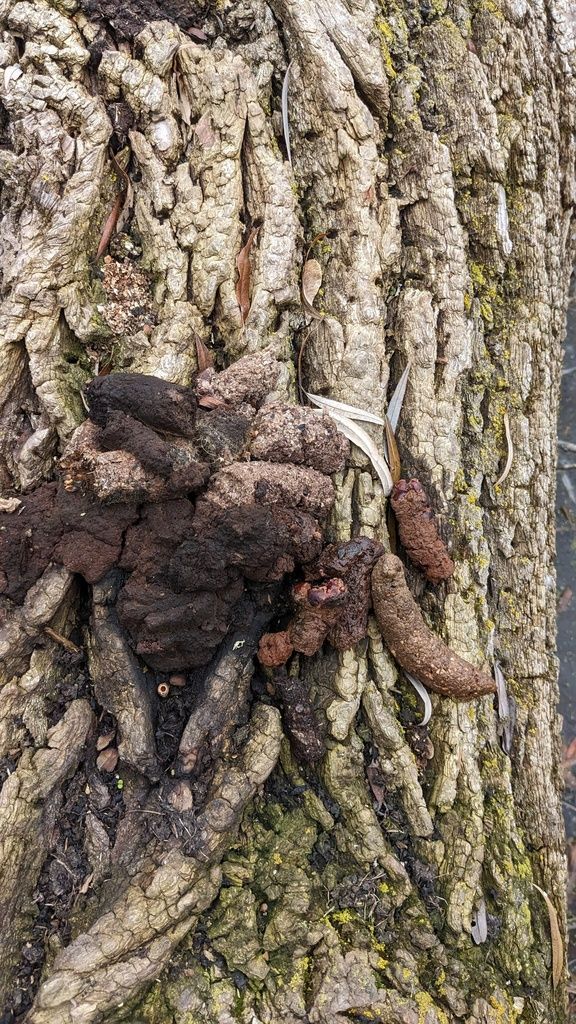
How to tell it
- Dark tubes about as thick as your thumb, with blunt ends, a few inches long.
- Often full of seeds, berry skins, corn or crayfish bits.
- Many droppings of different ages piled in one place: a latrine.
- Latrines sit on flat, raised spots: the base of trees, logs, stumps, large rocks, decks, rooftops, attics and even sandboxes.
Where you find it
Raccoons live in nearly every state, in towns as much as woods, usually near water.
Scientific name: Procyon lotor
Look-alikes
Similar size but usually left alone, not piled in a latrine.
Twisted, tapered ends and lots of hair, left on trails.
Usually smoother and uniform from dog food, and found where people walk dogs.
What it tells you
CDC explains that raccoon roundworm eggs pass in the droppings, become able to infect people after 2 to 4 weeks, and can survive for years in damp soil. People get infected by swallowing eggs from dirty hands, soil or objects. Cases are rare, but CDC counts six deaths among the 23 published US cases of brain infection as of 2018.
What to do
- Do not touch it, and keep children and pets away from the spot.
- Wash hands well after any time outside near a latrine, and before eating.
- For a latrine at home, use disposable gloves and boots or shoe covers, bag the droppings, and follow your health department's advice for the soil or surface. Burning or boiling water kills the eggs; most cleaners do not.
- Seal attic and chimney openings and remove food sources so raccoons stop using the spot.
The free app reads your photo, names the likely match, shows its look-alikes, and tells you what has been seen near your ZIP code.
Sources
Written in our own words from these public sources.