Animal sign
Mouse droppings: how to spot them and clean up without getting sick
Mouse droppings in a cabin, shed, shelter or camper are a warning, not just a mess. Deer mice in particular can carry hantavirus, and the wrong cleanup method puts it in the air you breathe.
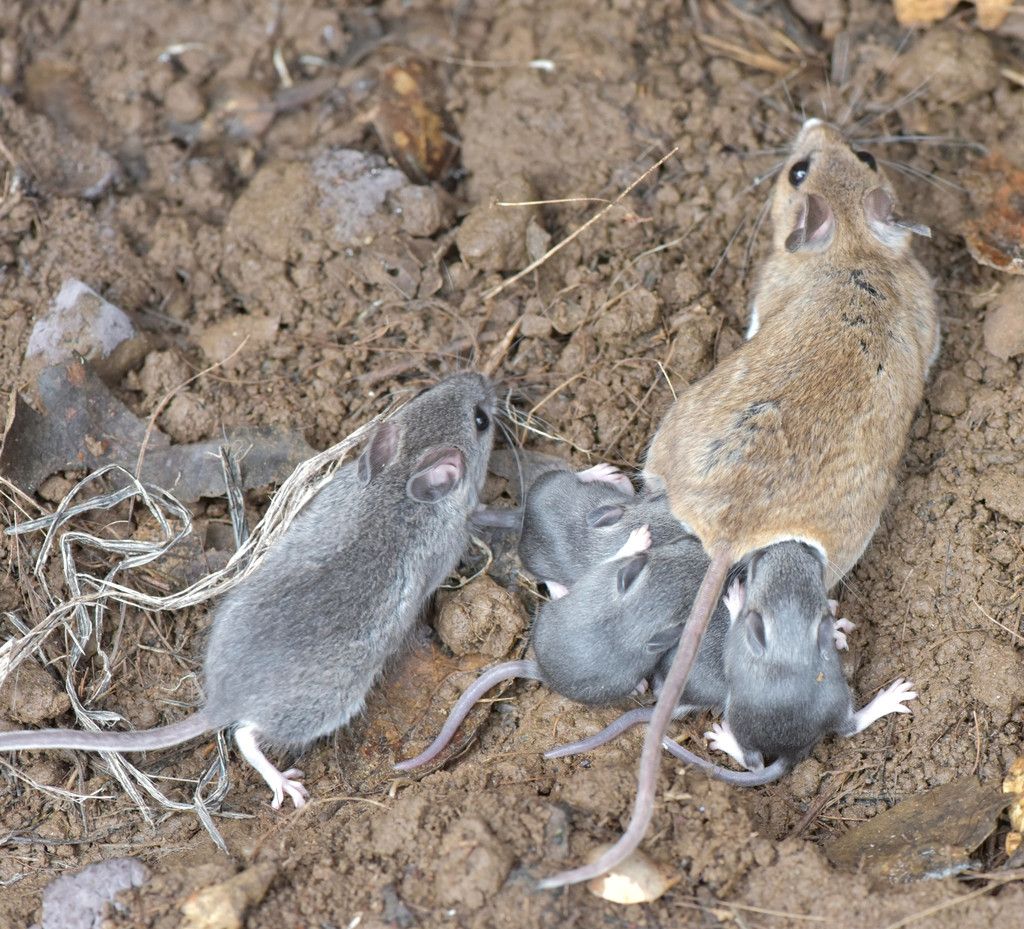
How to tell it
- Tiny: about the size of a grain of rice, an eighth to a quarter inch long.
- Dark, with pointed ends.
- Scattered along walls, in drawers, near food and around nests of shredded paper or fabric.
- The animal: deer mice have a white belly and white feet and a tail that is dark on top and white below.
Where you find it
Anywhere mice can get in: cabins, sheds, barns, campers, trail shelters and closed-up rooms. Deer mice live across most of the US.
Scientific name: Peromyscus and Mus
Look-alikes
Much larger, about a half inch or more, with blunter ends.
Larger and rounder, often in attics or under trees.
Crumble into shiny bits when pressed with a stick and pile under roosts.
What it tells you
Hantavirus spreads when dried droppings, urine or nests are stirred up and the dust is breathed in. CDC warns never to sweep or vacuum them. The illness starts like the flu and can quickly become a serious lung disease.
What to do
- Open doors and windows and leave the building for 30 minutes before cleaning.
- Put on rubber or plastic gloves.
- Spray the droppings and urine with a household disinfectant or a fresh bleach mix (1.5 cups of bleach in 1 gallon of water) until soaked, and wait 5 minutes.
- Wipe up with paper towels, bag them, and put them in a covered trash can. Then mop the area with disinfectant.
- Disinfect your gloves before taking them off, then wash your hands with soap and warm water.
- See a doctor and mention the mice if you get fever, aches and shortness of breath in the weeks after.
The free app reads your photo, names the likely match, shows its look-alikes, and tells you what has been seen near your ZIP code.
Sources
Written in our own words from these public sources.