Animal sign
Bobcat tracks: round prints with no claws
Bobcats live across most of the US but are rarely seen. Their round, clawless prints are often the only sign one has passed.
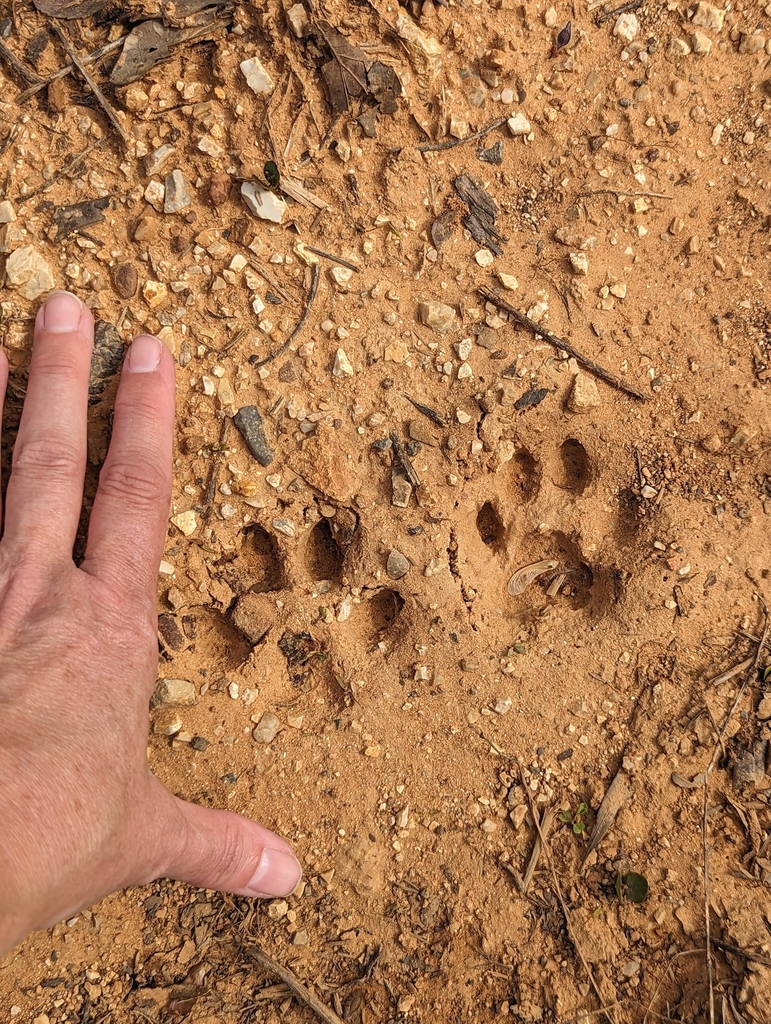
How to tell it
- Round prints about 2 inches across, as wide as they are long.
- Four toes and no claw marks, because cats pull their claws in.
- A large heel pad with three lobes along its back edge.
- The toes do not line up evenly; one front toe leads a little, like the longest finger on a hand.
Where you find it
Nearly every state, in forests, swamps, deserts, brushy hills and the edges of farms and suburbs.
Scientific name: Lynx rufus
Look-alikes
Same shape but smaller, about 1 to 1.5 inches, and usually near homes.
Oval, longer than wide, with claw marks.
Same round, clawless shape but twice as big, 3 inches and up.
What it tells you
Bobcats are no threat to people. Their tracks tell you there are rabbits, squirrels and other small animals in the area. Clawless round prints are also a clue to tell cats from the dog family when you read a trail.
What to do
- Take a photo with something for size and look for scat nearby, often partly scratched over.
- Keep small pets and chickens closed in at night in bobcat country.
- If you ever see one, enjoy it from a distance. Never corner one.
The free app reads your photo, names the likely match, shows its look-alikes, and tells you what has been seen near your ZIP code.
Sources
Written in our own words from these public sources.