Animal sign
Rabbit tracks: the Y-shaped group of four
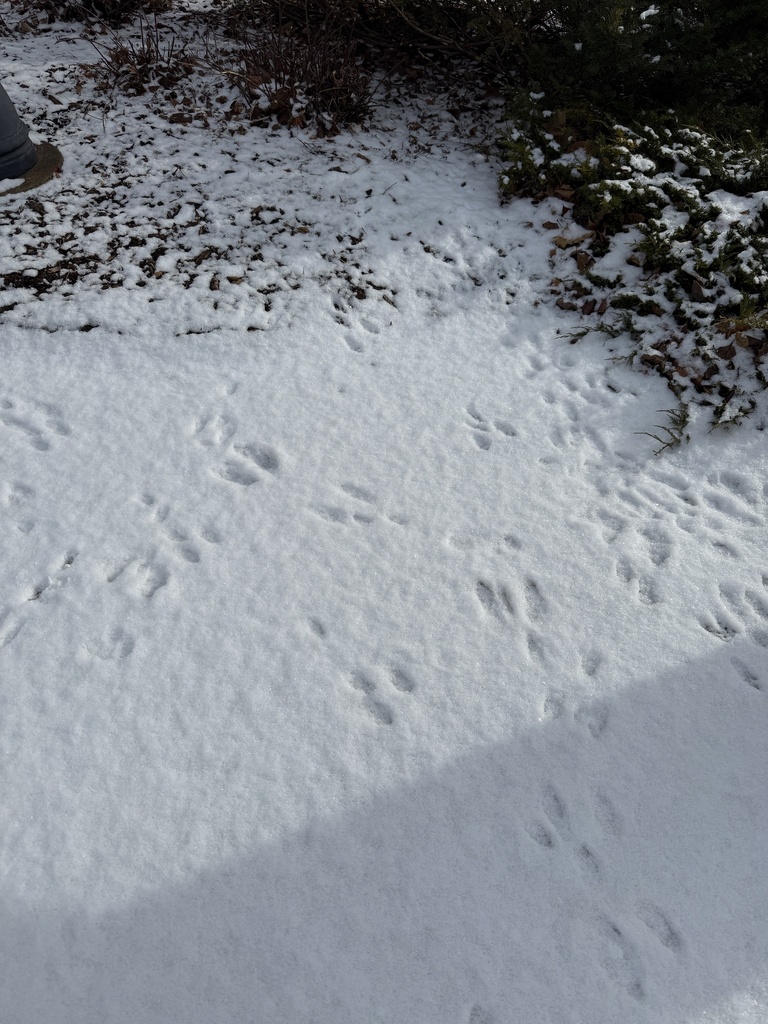
Rabbit tracks are among the easiest to read: four prints in a tight group, two big and two small, repeated every hop. They show up best in fresh snow.
How to tell it
- Groups of four prints, repeated every hop.
- Two long hind prints land side by side in front of two small round front prints, which often sit one behind the other.
- The group makes a Y or an exclamation point shape, with the wide end pointing the way the rabbit went.
- Hind prints 3 to 4 inches long for a cottontail, front prints about 1 inch.
Where you find it
Cottontails live across almost all of the US, in brushy field edges, thickets, yards and young woods. Jackrabbits and hares live in the West and North.
Scientific name: Sylvilagus
Look-alikes
Same hopping group, but the front prints sit side by side, and the trail starts or ends at a tree.
Much larger hind feet that splay wide in snow, in northern forests.
What it tells you
Rabbit trails often follow the same runs again and again, between thick cover and feeding spots. The survival manual teaches reading runs like these to learn what lives in an area. In much of the US, rabbits may only be hunted in season, not trapped.
What to do
- Follow the trail to find the run, the cover it leads to, and nibbled twigs or bark.
- Look for droppings: small, round, light brown balls.
- Check your own state wildlife agency's rules before you hunt or trap anything.
The free app reads your photo, names the likely match, shows its look-alikes, and tells you what has been seen near your ZIP code.
Sources
Written in our own words from these public sources.