Dangerous animal
Copperhead snake: how to identify it and what to do after a bite
The copperhead is the venomous snake most people in the eastern US will meet. Its pattern hides it perfectly in dead leaves, and most bites happen when someone steps on or reaches near one without seeing it.
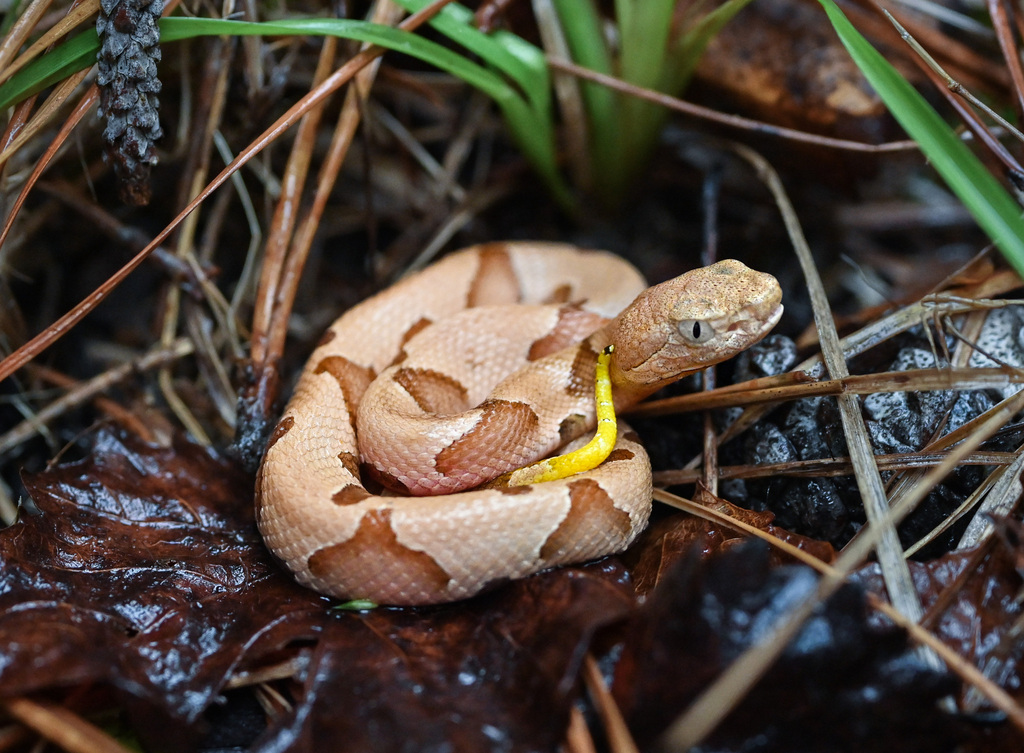
How to tell it
- Tan, pinkish or copper body crossed by darker reddish-brown bands.
- The bands are wide on the sides and narrow on the back, like an hourglass or a pair of chocolate kisses seen from above.
- A plain, copper-colored head that is wider than the neck.
- Young copperheads have a bright yellow or green tail tip.
- Usually 2 to 3 feet long, with a thick body.
Where you find it
From southern New England to northern Florida and west to Nebraska and western Texas: rocky wooded hillsides, leaf litter, woodpiles, old stone walls, and the edges of streams and swamps.
Scientific name: Agkistrodon contortrix and A. laticinctus
Look-alikes
Bands are wide on the back and narrow on the sides, the reverse of a copperhead, and it is usually found in or right beside water.
Orange to red blotches outlined in black, and a slimmer body.
Gray with dark blotches when young, slim, with a head barely wider than its neck.
Why it is dangerous
Copperhead venom causes strong pain, swelling and bruising, and can damage the bitten limb. Deaths are rare, but a bite still needs a hospital, and children, older adults and people bitten more than once are at the most risk.
What to do
- Back away slowly and let it leave. Copperheads rarely chase anyone.
- For a bite, call 911 or get to a hospital, keep the person calm and still, and take off rings and watches before swelling starts.
- Do not cut the bite, suck it, use a tourniquet or apply ice.
- Use a flashlight at night and look before you step over logs or reach into woodpiles, leaves or rock walls.
The free app reads your photo, names the likely match, shows its look-alikes, and tells you what has been seen near your ZIP code.
Sources
Written in our own words from these public sources.